Discovering your safe box lock is stuck can be a moment of genuine panic. Whether you’re safeguarding important documents, cherished heirlooms, or vital business assets, restricted access to your valuables is a frustrating and concerning situation. A stuck safe lock isn’t always a sign of a major problem; often, it’s a minor glitch that can be resolved with a few careful troubleshooting steps. Understanding the common causes and knowing the right actions to take can save you time, money, and unnecessary stress, helping you regain access to your protected items both quickly and safely.
Understanding Why Your Safe Lock Is Stuck
Before attempting any fixes, it’s crucial to understand why your safe lock might be jammed. Safe locks, whether electronic, keyed, or mechanical, can malfunction for various reasons, from simple user errors to mechanical wear and environmental factors. Identifying the root cause will guide you toward the most effective solution.
Electronic Safe Lock Issues
|
Our Picks for the Best Safe Box in 2026
As an Amazon Associate I earn from qualifying purchases.
|
||
| Num | Product | Action |
|---|---|---|
| 1 | KYODOLED Cash Box with Combination Lock Safe Metal Money Box with Money Tray for Security Lock Box 7.87"x 6.30"x 3.35" Black |

|
| 2 | DocSafe 5200°F Document Organizer with Lock, Upgraded Heat Insulated Fireproof&Water-Resistant Box 8 Layers File Organizer, Portable Home Travel Safe Storage for Important Documents and More |
|
| 3 | Amazon Basics Steel Security Safe and Lock Box with Electronic Keypad, Secure Documents Storage, Black, 0.5 Cubic Feet, 13.8" W x 9.8" D x 9.8" H, Removable Shelf |
|
| 4 | Yuanshikj Safe Box with Key Lock, Steel Security Lock Box, 0.23 Cubic Feet, 9.1" W x 6.7" D x 6.7" H, Small Hidden Safe for Home Office Cash Jewelry Storage (BLACK) |
|
| 5 | KYODOLED Fireproof Document Box with Key Lock, Small Lock Boxes for Personal Items, Fire and Water Resistance, Fireproof Safe Box for Documents, Jewelry, Passport, Cash, 12.6'' x 8.3'' x 4.3'' Black |
|
| 6 | SentrySafe Fireproof Safe with Key Lock, Chest Lock Box for Home or Travel Secures Money, Documents, 0.18 Cubic Feet, 6.1 x 14.3 x 11.2 Inches, 1210 |
|
| 7 | SentrySafe Black Fireproof and Waterproof Safe, File Folder and Document Box with Key Lock, Ex. 14.3 x 15.5 x 13.5 inches, HD4100 |
|
| 8 | Amazon Basics Steel Security Safe and Lock Box with Digital Keypad, Easy to Use, Removable Shelf, Secure Cash, Jewelry, Documents, Black, 1.2 Cubic Feet, 16.9-x-14.6-x-10.6-inches (WxDxH) |
|
| 9 | Amazon Basics Steel Home Security Safe Box with Electronic Keypad Lock for Documents, Jewelry, Valuables, 1.8 Cubic Feet, Black, 13.8"W x 13"D x 19.7"H |
|
| 10 | SentrySafe Fireproof Safe Box with Key Lock, Chest Safe with Carrying Handle to Secure Money, Jewelry, Documents, 0.25 Cubic Feet, 6.3 x 15.3 x 12.1 Inches, 1160 |
|
Electronic safes, while convenient, are often susceptible to power-related problems. The most frequent culprit is dead or low batteries, which can prevent the keypad from functioning or the locking mechanism from fully disengaging. Even if the keypad lights up, insufficient power can still lead to a locked safe. Another common issue is forgotten codes or accidental entry into lockout mode after multiple incorrect attempts, a security feature designed to deter unauthorized access. Internal electronic failures, loose keypad connections, or even issues with the override key can also prevent the safe from opening.
Keyed Safe Lock Issues
For traditional keyed safes, the problem often lies with the physical key or the keyhole itself. A bent or damaged key may not properly engage the lock pins, while debris or foreign objects lodged in the keyhole can obstruct the key’s movement. The internal locking mechanism might also be jammed or defective due to wear and tear, preventing the bolt from retracting even with the correct key.
Mechanical Combination Lock Issues
Mechanical combination safes rely on precision. Forgotten combinations are a clear barrier, but sometimes the numbers can “drift” over time due to internal wear and movement, meaning your remembered combination might be slightly off. Similar to keyed safes, debris within the mechanism can prevent the wheels from aligning correctly. Forcing the dial or handle can also lead to internal component misalignment, causing the lock to jam.
General Safe Lock Malfunctions
Beyond specific lock types, several factors can affect any safe. Overfilling the safe can create pressure against the door or locking bolts, preventing them from retracting. Door misalignment due to impact or uneven placement can also cause bolts to bind. Environmental factors like high humidity leading to rust, extreme cold causing metal contraction, or vibrations from nearby machinery can all contribute to a stuck lock. Additionally, improper handling techniques, such as aggressively spinning a dial or forcing a handle, can accelerate wear and lead to malfunctions.
Quick Fixes for Common Safe Lock Issues
When your safe lock is stuck, a calm and systematic approach can often resolve the problem without needing professional help. Here are some troubleshooting steps tailored to different safe types and general issues.
Troubleshooting Electronic Safes
Start with the most common problem: power. Replace the batteries immediately with fresh, high-quality alkaline batteries. Avoid rechargeable batteries as they may not provide consistent power. Ensure correct polarity when inserting them and, if possible, replace all batteries simultaneously. Many electronic safes have a hidden override key slot for emergency access; locate it (often behind a removable keypad panel or on the safe door) and use your override key if available.
If you’ve entered the code incorrectly multiple times, your safe might be in lockout mode. Exercise patience and wait for the lockout period to expire (typically 10-20 minutes) before trying again. Repeated attempts can restart the timer. If the keypad seems unresponsive after a battery change, check the keypad connections. Sometimes, unplugging the cable connecting the keypad to the safe, cleaning the ends with a rubber eraser, and reconnecting it can resolve communication issues. Finally, if there’s resistance, try applying gentle pressure to the safe door while entering the code or turning the handle to relieve any internal pressure on the locking bolts.
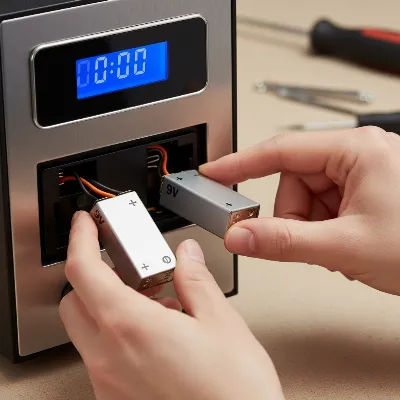 A person replacing batteries in an electronic safe keypad, showing fresh alkaline batteries.
Troubleshooting Keyed Safes
For keyed safes, begin by inspecting your key. Look for any signs of bending, damage, or excessive wear. If the key is compromised, trying a spare key is the next logical step. If the key is fine but won’t turn, debris in the keyhole might be the issue. Try blowing forcefully into the keyhole to dislodge any small particles. A can of compressed air can also be effective. While methods like using a paperclip or nail file might be tempting, they carry a significant risk of damaging the internal mechanism, so exercise extreme caution or avoid them if possible. If the key feels stuck or grinding, do not force it, as this could break the key inside the lock.
Troubleshooting Mechanical Combination Safes
When dealing with a mechanical combination lock, precise and deliberate dialing is key. Double-check your combination and ensure you’re following the manufacturer’s specific dialing sequence exactly. If you suspect combination drift (where the numbers have shifted slightly over time), try making minor adjustments to each number in your combination, for example, trying plus or minus one or two digits for each number. If repeated attempts fail, spinning the dial to the left three times before re-entering the combination can sometimes reset the mechanism. Similar to electronic safes, if the door seems stuck, try pushing inward on the safe door while gently turning the handle to alleviate any pressure that might be binding the bolts.
General Troubleshooting Tips for All Safes
Regardless of your safe’s type, if the lock feels jammed, a gentle approach can sometimes free it. Lightly tap around the edges of the safe door with a rubber mallet. This can help dislodge any internal components or debris that might be binding the locking mechanism. Ensure your safe is placed on a level and stable surface; an uneven safe can cause internal components to shift and bind the lock. Always consult your safe’s user manual for specific troubleshooting steps and manufacturer-recommended solutions, as procedures can vary significantly between models.
When to Call a Professional Safe Technician
While many safe lock issues can be resolved with DIY troubleshooting, there are situations where calling a professional safe technician or locksmith is the safest and most sensible course of action. Attempting to fix complex issues yourself can often lead to further damage, increased costs, or even compromise the safe’s integrity.
Identifying Complex Issues
You should consider professional help if:
- Troubleshooting steps have failed. If you’ve tried all the common fixes for your safe type and it still won’t open, the problem is likely more complex, possibly involving internal component wear or failure.
- The lock mechanism feels damaged or entirely unresponsive. A professional can diagnose issues like a broken bolt, a faulty electronic circuit board, or a completely seized mechanical lock.
- Your key is bent, broken, or lost, and you don’t have a spare.
- You’ve forgotten your combination, and there’s no override key or reset option available to you.
- The safe is high-security or contains extremely valuable/irreplaceable items. The risk of damage during a DIY attempt is too high.
> “While the internet offers many DIY solutions, the intricate mechanisms of modern safes often require specialized knowledge and tools. Forcing a safe can lead to irreparable damage, turning a solvable problem into a costly replacement.” – John D. Smith, Certified Safe Technician
Risks of DIY Safe Cracking
Resorting to “DIY safe cracking” methods, especially those involving destructive force or unverified techniques, carries significant risks:
- Irreversible Damage: You could damage the lock mechanism, the door, or the safe body beyond repair, necessitating a full safe replacement.
- Damage to Contents: Incorrect methods can harm the very items you’re trying to protect.
- Triggering Lockout Mechanisms: Some security features are designed to make forced entry more difficult, potentially activating advanced lockout modes that make professional intervention more challenging and expensive.
- Personal Injury: Safes are heavy, and their components can be under tension. Attempting to manipulate them without proper training can lead to injury.
- Compromised Security: An improperly opened or repaired safe might be less secure, leaving your valuables vulnerable in the future.
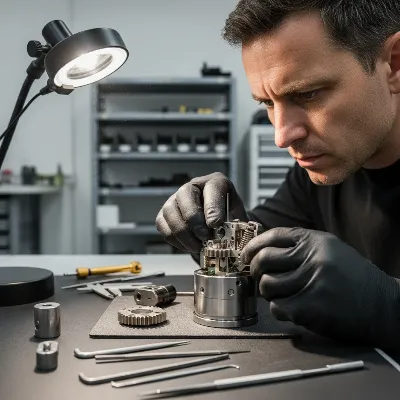 A professional safe technician using specialized tools to work on a complex safe lock mechanism.
Benefits of Professional Assistance
A professional safe technician or locksmith brings expertise, specialized tools, and ethical practices to the table. They can:
- Diagnose the problem accurately: Professionals have the training to quickly identify the specific cause of the lock failure.
- Employ non-destructive methods: They will always prioritize opening the safe without damaging it or its contents, often using manipulation or specialized decoding tools.
- Repair or replace components: If a part is broken, they can often repair or replace it, restoring your safe to full functionality.
- Ensure security: After opening, they can verify the safe’s security features are intact or recommend necessary upgrades.
- Provide peace of mind: Knowing your valuable assets are being handled by an expert minimizes risk and stress.
Preventing Future Safe Lockups
Preventive maintenance and proper usage are crucial for ensuring the long-term reliability of your safe box lock. A little attention now can prevent a lot of frustration later.
Regular Maintenance Practices
For electronic safes, the most important maintenance is to regularly replace batteries, ideally every 6 to 12 months, even if the safe isn’t frequently used. This proactive step prevents most electronic lock failures. For mechanical locks, lubrication is essential, but it must be done correctly. Avoid spraying oil-based lubricants like WD-40 directly into combination locks, as these can attract dust and gum up the mechanism. Instead, mechanical locks should be lubricated periodically by a professional safe technician using specific, non-petroleum-based lubricants like AeroShell 22 or specialized PTFE powders. They can disassemble, clean, and lubricate the internal components properly. For keyed locks, a small amount of graphite powder blown into the keyway can help, but avoid mixing lubricants.
Proper Safe Usage and Placement
Always avoid overfilling your safe. Ensure there’s enough clearance inside so that items don’t press against the door or locking bolts, which can cause binding. When closing the safe, do so gently and ensure the door is fully shut before attempting to lock it. Avoid using excessive force when turning the handle or spinning the dial, as this can accelerate wear on internal mechanisms. Pay attention to your safe’s location: ensure it’s on a level, stable surface and away from areas prone to extreme temperature fluctuations, high humidity, or heavy vibrations. These environmental factors can contribute to rust, contraction/expansion of metal, and misalignment of components over time.
Keeping Records and Backups
This simple step is often overlooked but can be a lifesaver. Keep a secure record of your safe’s combination or code in a separate, confidential location, away from the safe itself. If your safe comes with an override key, store it in a secure place outside your home or with a trusted individual, never inside the safe. Familiarize yourself with your safe’s user manual and keep it accessible, as it contains vital information for troubleshooting and maintenance. Regularly checking and updating these records ensures you always have a fallback should a lockup occur.
By implementing these preventive measures, you can significantly reduce the likelihood of experiencing a stuck safe box lock, ensuring your valuables remain accessible when you need them most.
Conclusion
A stuck safe box lock can be an alarming inconvenience, but with a systematic approach, many issues can be resolved effectively and safely. By understanding the common causes—from dead batteries in electronic safes to debris in keyed locks and combination drift in mechanical ones—you can apply targeted quick fixes. Always prioritize gentle methods and consult your user manual before resorting to more drastic actions. Remember the critical distinction: while some problems lend themselves to DIY solutions, complex malfunctions or valuable contents warrant the expertise of a professional safe technician. Regular maintenance, including timely battery replacement and professional lubrication, along with proper safe usage, are your best defenses against future lockups. Why wait for an emergency when you can proactively protect your peace of mind and access to your most important possessions?
Frequently Asked Questions
Can I lubricate my safe’s combination lock myself?
It’s generally not recommended to lubricate a combination lock yourself. Mechanical safe locks require specific lubricants, and improper products (like oil-based sprays) can attract dust and gum up the mechanism, causing more problems. A professional safe technician has the right tools and lubricants to disassemble, clean, and properly lubricate the internal components without causing damage.
What should I do if my electronic safe won’t open after changing the batteries?
If your electronic safe still won’t open after replacing the batteries, check if it’s in lockout mode (wait 10-20 minutes). Also, inspect the keypad cable connections; sometimes unplugging, cleaning, and reconnecting can help. If these steps fail, there might be an internal electronic fault or a mechanical issue requiring professional assistance.
Is it safe to try picking a keyed safe lock with a paperclip?
Attempting to pick a safe lock with improvised tools like a paperclip or nail file is generally not recommended. Safes are designed to resist such methods, and you risk damaging the delicate internal locking mechanism, making it harder and more expensive for a professional to open. It’s safer to consult a locksmith, especially if the contents are valuable.
How often should I have my safe serviced?
The frequency of safe servicing depends on its type, age, and usage. For electronic safes, changing batteries every 6-12 months is key. Mechanical safes benefit from professional inspection and lubrication every 1 to 5 years, particularly if the dial becomes stiff. If you notice any unusual resistance or sounds, it’s wise to have it checked sooner by a certified technician.
What if I forgot my safe combination and lost the override key?
If you’ve forgotten your safe combination and don’t have an override key, you’ll almost certainly need to contact a professional safe technician or the safe manufacturer. They have specialized tools and methods to open the safe without damaging it, and can often reset the combination for you. Avoid attempting to force the safe open, as this could lead to irreparable damage.
