In an unpredictable world, safeguarding your most valued possessions at home has become more critical than ever, not just from theft but also from natural disasters like fires and floods. A reliable home safe offers peace of mind, protecting everything from vital documents and heirlooms to digital media and firearms. When considering a home safe, two names frequently emerge as industry leaders: SentrySafe and Honeywell. This comprehensive comparison will delve into the features, benefits, and considerations for each brand, guiding you to select the optimal safe for your specific security needs in 2026.
Understanding Home Safe Essentials
Selecting the right home safe involves understanding the fundamental protections they offer. Beyond simply locking items away, modern safes are engineered to withstand various threats. Primarily, a home safe provides security against unauthorized access and theft. Equally crucial are protections against environmental perils, specifically fire and water, which can devastate irreplaceable items faster than any burglar. Different safes incorporate varied lock mechanisms, from traditional keys and reliable combinations to advanced digital keypads and biometric fingerprint scanners, each offering a distinct balance of convenience and security.
Key Protection Types
Home safes are designed to counter several types of threats, ensuring your valuables remain intact.
- Security Protection: This refers to the safe’s ability to resist forced entry attempts, typically measured by factors like steel thickness, lock complexity, and pry resistance. Stronger security safes often feature live-locking bolts and reinforced doors.
- Fire Protection: Certified fire safes can withstand extreme temperatures for a specified duration, keeping internal temperatures below a critical threshold to protect paper documents and other heat-sensitive items. Ratings from Underwriters Laboratories (UL) indicate tested fire resistance.
- Water Resistance: Many modern safes offer protection against water damage from floods, burst pipes, or even firefighting efforts. This usually involves specialized seals around the door and body, verified by independent testing laboratories like ETL.
- Impact Resistance: Some safes are tested to endure significant drops (e.g., from a falling floor in a burning building) while remaining intact and closed, ensuring contents are not scattered or exposed.
|
Our Picks for the Best Safe Box in 2026
As an Amazon Associate I earn from qualifying purchases.
|
||
| Num | Product | Action |
|---|---|---|
| 1 | KYODOLED Cash Box with Combination Lock Safe Metal Money Box with Money Tray for Security Lock Box 7.87"x 6.30"x 3.35" Black |

|
| 2 | KYODOLED Fireproof Document Box with Key Lock, Small Lock Boxes for Personal Items, Fire and Water Resistance, Fireproof Safe Box for Documents, Jewelry, Passport, Cash, 12.6'' x 8.3'' x 4.3'' Black |
|
| 3 | Amazon Basics Steel Security Safe and Lock Box with Electronic Keypad, Secure Documents Storage, Black, 0.5 Cubic Feet, 13.8" W x 9.8" D x 9.8" H, Removable Shelf |
|
| 4 | SentrySafe Fireproof Safe Box with Key Lock, Chest Safe with Carrying Handle to Secure Money, Jewelry, Documents, 0.25 Cubic Feet, 6.3 x 15.3 x 12.1 Inches, 1160 |
|
| 5 | DocSafe 5200°F Document Organizer with Lock, Upgraded Heat Insulated Fireproof&Water-Resistant Box 8 Layers File Organizer, Portable Home Travel Safe Storage for Important Documents and More |
|
| 6 | SentrySafe Fireproof Safe with Key Lock, Chest Lock Box for Home or Travel Secures Money, Documents, 0.18 Cubic Feet, 6.1 x 14.3 x 11.2 Inches, 1210 |
|
| 7 | Yuanshikj Safe Box with Key Lock, Steel Security Lock Box, 0.23 Cubic Feet, 9.1" W x 6.7" D x 6.7" H, Small Hidden Safe for Home Office Cash Jewelry Storage (BLACK) |
|
| 8 | Amazon Basics Steel Security Safe and Lock Box with Digital Keypad, Easy to Use, Removable Shelf, Secure Cash, Jewelry, Documents, Black, 1.2 Cubic Feet, 16.9-x-14.6-x-10.6-inches (WxDxH) |
|
| 9 | Amazon Basics Steel Home Security Safe Box with Electronic Keypad Lock for Documents, Jewelry, Valuables, 1.8 Cubic Feet, Black, 13.8"W x 13"D x 19.7"H |
|
| 10 | SentrySafe Black Fireproof and Waterproof Safe, File Folder and Document Box with Key Lock, Ex. 14.3 x 15.5 x 13.5 inches, HD4100 |
|
Common Lock Mechanisms
The locking mechanism is your primary interface with the safe and a critical security component.
- Combination Locks: These mechanical locks offer long-term reliability without needing batteries. They are generally robust but can be slower to open.
- Digital Keypad Locks: Providing quick and convenient access with a programmable code, digital locks often feature backlighting for low-light conditions. They require batteries for operation.
- Biometric Locks: Offering the fastest access, biometric locks use fingerprint recognition. While highly convenient, their reliability can vary, and most include a backup keypad or key for emergencies.
- Key Locks: Basic and straightforward, key locks are common on smaller, portable chests. They offer privacy but are less secure against determined attacks compared to other types.
SentrySafe: Robust Protection and Innovation
SentrySafe, a brand with a long-standing reputation, is synonymous with robust security and pioneering fire and water protection in home safes. Their product philosophy centers on providing diverse and dependable storage solutions for everyday homeowners. The brand is a go-to for many seeking certified protection against both theft and environmental damage.
Key Features of SentrySafe
SentrySafe models are engineered with several core features designed for maximum security. Their safes often boast solid steel construction, offering a formidable barrier against forced entry. Many models incorporate pry-resistant hinge bars and multiple live-locking bolts that deeply engage into the safe’s frame, significantly increasing resistance to prying attempts. SentrySafe provides a wide array of locking mechanisms, including reliable combination dials, convenient digital keypads, and advanced biometric options, allowing users to choose based on their preferred access method and security level. For enhanced protection against sophisticated attacks, some designs even include anti-drill doors and anti-fish hoppers, deterring unauthorized manipulation.
Fire and Water Resistance Excellence
A cornerstone of the SentrySafe brand is its commitment to superior fire and water resistance, often backed by rigorous independent certifications. Their safes are typically UL classified, meaning they have been tested to withstand specific temperatures (e.g., 1700°F) for defined periods (e.g., one hour or even two hours at 1850°F) while maintaining an internal temperature safe for documents and digital media. Beyond fire, SentrySafe also excels in water protection, with many models ETL verified to resist water ingress for extended periods, sometimes up to 72 hours of submersion. This dual protection is crucial for protecting against both fire suppression efforts and unexpected flooding, offering comprehensive safeguarding for your valuables.
Popular SentrySafe Models
- SentrySafe SFW123GDC: This highly-rated digital safe is celebrated for its strong fire and burglary protection, enduring prolonged fire exposure and proving difficult for intruders to breach. Its substantial weight also deters easy removal.
- SentrySafe HD4100 Fireproof Safe: Specifically designed for documents, this model offers excellent fire and water resistance, ensuring critical paperwork remains dry and undamaged even after extended submersion.
- SentrySafe 1200 Fireproof Box: A popular portable option, this compact chest provides basic fireproof protection for small valuables and essential documents, ideal for those with minimal storage needs or who require portability.
> “When evaluating home safes, remember that certifications like UL for fire and ETL for water resistance are crucial indicators of a safe’s true protective capabilities, separating verified performance from marketing claims.”
SentrySafe Pros & Cons
- Pros: Excellent UL fire ratings, generally strong burglary deterrence with heavy construction and live-locking bolts, a wide range of locking options, and many models offer robust water resistance. Good for storing a variety of items, from documents to valuables.
- Cons: Some specific models, despite being marketed as “waterproof,” might not perform flawlessly in all water tests. Heavier models can be challenging to move or install without assistance.
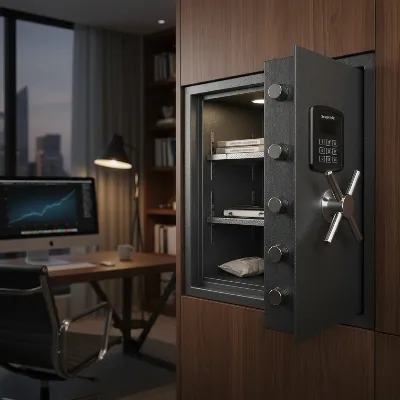 A SentrySafe home safe with its digital keypad and robust locking bolts visible, highlighting its security features.
Honeywell: Advanced Security and Value
Honeywell, a globally recognized brand, extends its expertise in home solutions to security, offering a line of safes known for advanced security features and solid construction. While perhaps less focused on sheer variety than SentrySafe, Honeywell emphasizes durable designs and cutting-edge locking technologies to protect valuables efficiently. They often provide competitive pricing, making robust security accessible to a broader audience.
Key Features of Honeywell Safes
Honeywell safes are characterized by their robust construction and incorporation of advanced security mechanisms. Many models feature heavy-gauge steel, reinforced doors, and motorized locking bolts that offer enhanced protection against tampering and forced entry. Honeywell frequently integrates modern locking systems, including sophisticated electronic keypads, hotel-style digital locks allowing temporary passcodes, and even biometric access on some higher-end models. Features like concealed hinges, recessed doors, and anti-tamper latches are commonly found, all contributing to a formidable defense against intruders. Their offerings span from compact security boxes ideal for small items to larger fire-resistant units.
Fire and Water Resistance Considerations
Honeywell provides safes with various levels of fire and water resistance, catering to different protection needs. Models such as the Honeywell 1108 are highly praised for their UL fire ratings, capable of withstanding significant temperatures (e.g., 1700°F for one hour) while protecting contents like hanging files. These often also include water-resistant door and cabinet designs to combat leaks and spills. However, it’s important to note that some smaller, portable Honeywell safes, like the 6104, are specifically designated as “fire-resistant” rather than “fireproof.” This distinction is critical, as fire-resistant models offer brief protection, suitable for quick evacuation scenarios, but not sustained exposure to intense house fires. Honeywell’s transparency about these ratings helps consumers make informed decisions based on their specific risk assessment.
Popular Honeywell Models
- Honeywell 1108: Highly recommended for documents, especially legal-sized hanging files, this safe offers superior UL-rated fire and water protection. Its roomy interior and sleek design are notable.
- Honeywell 1114: A compact, small waterproof and fireproof chest, ideal for protecting critical small items and documents, though some tests indicate it might be less resistant to physical attacks than heavier safes.
- Honeywell 6108: This small, digital lock safe box provides fire-resistant insulation and a foam-padded interior, perfect for jewelry, cash, and small electronics, with good portability.
- Honeywell 5605: A compact steel digital security box, this model is great for basic theft deterrence of small items but typically lacks fire or water protection, serving as a simple lockbox.
Honeywell Pros & Cons
- Pros: Often features advanced digital and biometric locking systems, durable construction with anti-tamper features, strong fire and water protection in higher-end models, and generally offers good value for money.
- Cons: Some compact models may lack fire/water protection, and basic chests might be less robust against determined physical attacks compared to heavier, more secure units. The “fire-resistant” vs. “fireproof” distinction needs careful attention.
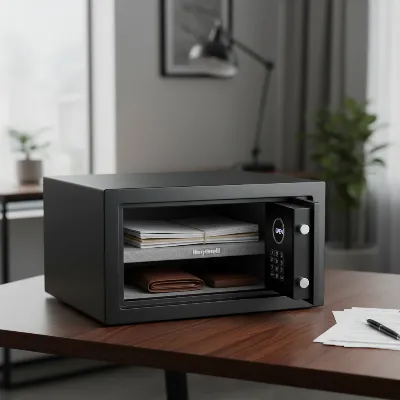 A compact Honeywell safe with a digital lock, illustrating its modern security features for home use.
SentrySafe vs Honeywell: A Detailed Comparison
When choosing between SentrySafe and Honeywell, a direct comparison of their core offerings helps highlight where each brand excels. Both are reputable, but their strengths often cater to slightly different priorities.
| Feature | SentrySafe | Honeywell |
|---|---|---|
| Security | Robust steel construction, pry-resistant hinge bars, 2-4 live-locking bolts. Often heavier, deterring removal. | Durable steel, often includes anti-tamper latches, recessed doors, motorized locking bolts. |
| Fire Protection | UL classified (e.g., 1700°F for 1 hr, some up to 2 hrs at 1850°F). Strong performance for paper/digital media. | UL rated (e.g., 1700°F for 1 hr on models like 1108). Some smaller units are “fire-resistant” (brief protection). |
| Water Resistance | ETL verified (e.g., 24-72 hrs submersion). Effective seals. | Water-resistant door and cabinet design on many fire-rated models. ETL verification on specific units. |
| Lock Options | Combination, Digital, Biometric, Key. Wide variety to suit preferences. | Digital keypad, Biometric, Key. Often focuses on electronic convenience. |
| Capacity Range | From small portable chests (0.28 cu ft) to large upright safes (1.23+ cu ft). Adjustable shelves common. | From compact security boxes (0.15 cu ft) to larger fire safes (5.83+ cu ft). |
| Price Point | Generally competitive, with options across various budget ranges for diverse features. | Often offers competitive pricing, providing good value for integrated security features. |
| Warranty | Varies by model, often 1-5 year limited warranty with after-fire guarantees. | Typically 5-7 year limited warranty, with a lifetime after-fire guarantee on many models. |
| Noted Strengths | Exceptional fire protection, good impact resistance, broad range of sizes and lock types, strong burglary deterrence. | Advanced electronic/biometric locks, good value, sleek designs, specialized models (e.g., for hanging files or depository). |
Key Differences
The primary distinction often lies in their emphasis and market segment. SentrySafe tends to lead with robust, independently certified fire and impact resistance, making them a strong choice for those prioritizing comprehensive peril protection. Their safes are frequently heavier and built with a focus on deterring physical attacks and removal. Honeywell, while also offering excellent fire and water protection in certain models, sometimes puts a stronger emphasis on advanced digital and biometric locking systems, offering quicker access and sleek designs. Their range includes more basic security boxes without fire/water ratings, catering to different tiers of security needs and budgets. SentrySafe often provides a wider array of options in terms of size and specific internal organization features like adjustable shelving.
How to Select Your Ideal Home Safe
Choosing the perfect home safe is a highly personal decision, directly linked to what you intend to protect and the specific risks you foresee. A thorough assessment of your needs will simplify the selection process.
Assess Your Needs
Before diving into models, consider these crucial questions:
- What items do you need to protect? Are they documents, cash, jewelry, firearms, digital media, or a combination? This dictates the required fire, water, and security ratings, as well as internal capacity. Digital media, for instance, requires lower internal temperatures than paper during a fire.
- What specific threats are you most concerned about? Is it primarily theft, fire, flood, or all three? Your threat assessment will guide the necessary protection features.
- Where will the safe be located? This influences size, weight, and installation options (freestanding, bolt-down, in-wall).
- What is your budget? While it’s advisable to invest 10-20% of the value of the contents in the safe, set a realistic budget.
Critical Features to Look For
Once your needs are defined, focus on these critical safe features:
- Size and Capacity: Measured in cubic feet, ensure the interior dimensions are sufficient for all items, including room for growth. Adjustable shelves can maximize usable space.
- Security Ratings: Look for independent burglary ratings like UL RSC (Residential Security Container) or higher ratings like TL-15 or TL-30 for more substantial protection against skilled attacks.
- Fire Ratings: UL Class 350 ratings are standard for paper documents (internal temp below 350°F). Ratings typically specify duration (e.g., 30 minutes, 1 hour, 2 hours) at a certain external temperature (e.g., 1550°F or 1700°F).
- Water Resistance: ETL verification for submersion depth and duration (e.g., 24 hours in 8 inches of water) indicates reliable water protection.
- Lock Type and Reliability: Choose a lock type that balances security, ease of access, and reliability. Combination locks are durable, digital are fast, and biometrics are instant. Consider models with backup keys or override systems.
- Bolt-Down Capability: For freestanding safes, bolt-down hardware is essential to prevent thieves from simply carrying the safe away. This secures the safe to the floor or wall.
Placement Considerations
The location of your safe is almost as important as the safe itself.
- Freestanding Safes: These are the most common type and can be placed almost anywhere. Always bolt them down to a structural element to prevent theft.
- Built-in/In-Wall Safes: These offer concealment and can be integrated into walls or floors, making them harder for burglars to find. However, they typically have limited capacity and may lack robust fire protection due to wall insulation constraints.
- Portable Safes/Chests: Lightweight and easy to move, these are suitable for very small valuables or travel. They offer basic protection, often without strong burglary resistance.
Top Picks for 2026
Based on a balance of security, fire/water protection, and user feedback, here are some top recommendations spanning both SentrySafe and Honeywell lines for 2026:
Best Overall for Fire & Burglary Protection: SentrySafe SFW123GDC
The SentrySafe SFW123GDC stands out as a top contender for comprehensive home protection. This digital safe offers robust UL-classified fire protection, safeguarding contents against extreme temperatures for an extended period. Its heavy construction and multiple live-locking bolts provide significant resistance against burglary attempts, making it difficult to open or remove from your home. While one review noted a specific water test failure, its overall fire and security features are exceptional for general home use, especially when bolted down.
Best for Documents & Files: Honeywell 1108
For those prioritizing the safety of critical documents, the Honeywell 1108 is an excellent choice. This safe is specifically designed to accommodate legal and letter-sized hanging files, keeping paperwork organized and accessible. It boasts high UL fireproof ratings, enduring temperatures up to 1700°F for an hour, and offers top-notch protection against water damage, making it ideal for birth certificates, passports, and other vital records.
Best Compact & Portable: Honeywell 1114
If your needs lean towards a smaller, more portable solution that still offers peril protection, the Honeywell 1114 is a strong option. This waterproof and fireproof chest provides essential safeguarding for small valuables and crucial documents. Its compact size makes it easy to store in discreet locations or transport when needed, balancing convenience with reliable, though basic, fire and water resistance.
Buying Your Home Safe: Tips and Advice
Purchasing a home safe is a significant investment in your security. Being well-informed can prevent common pitfalls and ensure you get a product that truly meets your expectations.
Where to Purchase Your Safe
You have several reliable avenues for buying a home safe.
- Online Retailers: Websites like Amazon, Home Depot, and Walmart offer a vast selection of SentrySafe and Honeywell models, often with competitive pricing and detailed customer reviews. Be sure to check shipping costs and return policies, especially for heavier items.
- Home Improvement Stores: Physical stores provide the opportunity to see safes in person, check their build quality, and assess their size. Staff can also offer guidance, though their expertise might be general.
- Specialty Safe Dealers: For high-security needs or custom solutions, a dedicated safe dealer can provide expert advice, professional installation, and a wider range of high-end options that may exceed standard consumer models.
Key Considerations Before Finalizing Your Purchase
Always perform a thorough check before committing to a purchase.
- Verify Certifications: Double-check that fire (UL) and water (ETL) resistance ratings are clearly stated and meet your requirements. Don’t rely solely on general “fireproof” or “waterproof” claims; look for specific independent verification.
- Examine the Warranty: Understand the terms of the limited warranty, especially for parts and labor. Many reputable brands like Honeywell and SentrySafe offer a lifetime after-fire guarantee, which provides a replacement safe if yours is damaged in a fire.
- Read User Reviews: Customer feedback can offer practical insights into a safe’s real-world performance, ease of use, and potential issues not covered in product specifications. Look for patterns in reviews regarding reliability and customer service.
- Inspect Construction (if possible): If buying in-store, check for solid steel construction, the thickness of the door, the number and size of locking bolts, and the smoothness of the locking mechanism. Ensure there are no visible defects.
- Consider Installation: If the safe is not easily portable, plan for its delivery and placement. Bolting down a freestanding safe is critical for security, so ensure you have the necessary hardware or professional assistance.
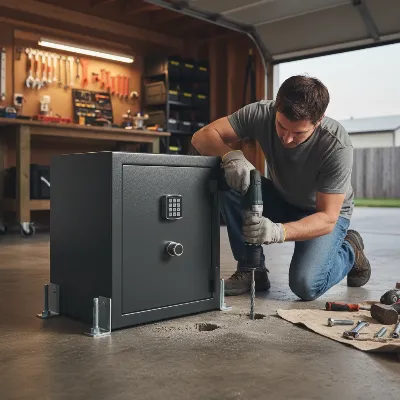 A person bolting down a home safe to the floor, emphasizing secure installation for theft prevention.
Conclusion
Choosing the right home safe in 2026 is a vital decision for protecting your valuables and securing your peace of mind. Both SentrySafe and Honeywell offer compelling options, each with distinct strengths. SentrySafe typically excels with its robust, independently certified fire and impact protection, making it an excellent choice for those prioritizing comprehensive peril defense and strong physical deterrence. Honeywell, on the other hand, often provides advanced electronic and biometric locking systems, offering competitive value and sleek designs for modern homes.
Ultimately, the best safe is the one that meticulously matches your specific security needs, the value of your contents, and your home environment. By carefully assessing your requirements, understanding key features like fire and water ratings, and considering lock mechanisms and capacity, you can confidently select a safe that serves as an impenetrable guardian for your most cherished possessions. What specific threat are you most concerned about protecting your valuables from?
Frequently Asked Questions
What is the difference between fire-resistant and fireproof safes?
The terms “fire-resistant” and “fireproof” are often used interchangeably, but technically, no safe is entirely fireproof. A “fire-resistant” safe is designed to withstand high temperatures for a limited time, delaying heat transfer to protect contents. “Fireproof” is a more colloquial term, typically referring to safes with certified fire ratings (e.g., UL rated) that specify precisely how long and at what temperature they can protect internal contents (like keeping the inside below 350°F for paper).
Do home safes truly protect against theft?
Yes, home safes are designed to deter and resist theft. While no safe is impenetrable to a professional with unlimited time and tools, even a basic bolted-down safe can significantly slow down or thwart opportunistic burglars who often seek quick access. Higher-security safes with strong steel construction, multiple locking bolts, and sophisticated locks provide substantial protection against determined attacks.
How often should I change my safe’s batteries?
For safes with electronic or biometric locks, it’s recommended to replace the batteries annually as a proactive measure. Many safes will provide a low-battery warning, but changing them regularly prevents unexpected lockouts. Always use fresh, high-quality alkaline batteries and avoid mixing old and new ones.
Can a safe be too heavy?
While a heavier safe is generally more secure against “grab and run” theft, it can be challenging to move and install. Consider the weight relative to your installation location, especially if placing it on an upper floor. Professional installation is often recommended for very heavy safes to ensure structural integrity and proper bolting.
What do UL and ETL certifications mean for safes?
UL (Underwriters Laboratories) and ETL (Edison Testing Laboratories) are independent third-party testing organizations. UL certification for safes primarily focuses on fire resistance and burglary ratings, providing standardized performance benchmarks. ETL verification typically confirms water resistance specifications, such as a safe’s ability to protect contents when submerged for a certain period. These certifications offer crucial, objective proof of a safe’s protective capabilities.
