In an unpredictable world, safeguarding your most cherished possessions, from irreplaceable documents to valuable heirlooms, is a top priority for every homeowner. While comprehensive home security systems offer a broad defense, a well-chosen safe box provides a crucial, impenetrable layer of protection for your most vital assets. Selecting the perfect safe isn’t merely about buying a metal box; it’s about understanding your needs, the types available, and the features that truly matter. This guide will walk you through the essential considerations, helping you navigate the market to find a safe box that offers ultimate peace of mind.
Common Types of Safe Boxes
Understanding the diverse range of safe boxes available is the first step toward securing your valuables effectively. Each type is designed with specific environments and security requirements in mind.
Home Safe Boxes
Home safe boxes are primarily designed for residential use, offering protection against theft, fire, and sometimes water damage. Their sizes vary widely, from compact models ideal for jewelry and passports to larger units accommodating multiple binders of documents and small firearms.
- Advantages: Provide convenient access to important items, offer a primary defense against common household threats, and come in various designs that can be concealed or bolted down.
- Disadvantages: Generally offer less robust security than commercial-grade safes, and smaller, lighter models can be susceptible to being carried away if not properly anchored.
- Suitable sizes and capacities: From small chests (0.1-0.5 cubic feet) for documents and personal items to medium-sized safes (1-2 cubic feet) for larger collections of valuables.
- Essential features: Look for fire ratings (e.g., 30-60 minutes at 1550-1700°F), basic water resistance, and reliable locking mechanisms such as electronic keypads or biometric scanners for quick, secure access.
|
Our Picks for the Best Safe Box in 2026
As an Amazon Associate I earn from qualifying purchases.
|
||
| Num | Product | Action |
|---|---|---|
| 1 | SentrySafe Fireproof Safe with Key Lock, Chest Lock Box for Home or Travel Secures Money, Documents, 0.18 Cubic Feet, 6.1 x 14.3 x 11.2 Inches, 1210 |

|
| 2 | DocSafe 5200°F Document Organizer with Lock, Upgraded Heat Insulated Fireproof&Water-Resistant Box 8 Layers File Organizer, Portable Home Travel Safe Storage for Important Documents and More |
|
| 3 | SentrySafe Fireproof Safe Box with Key Lock, Chest Safe with Carrying Handle to Secure Money, Jewelry, Documents, 0.25 Cubic Feet, 6.3 x 15.3 x 12.1 Inches, 1160 |
|
| 4 | KYODOLED Fireproof Document Box with Key Lock, Small Lock Boxes for Personal Items, Fire and Water Resistance, Fireproof Safe Box for Documents, Jewelry, Passport, Cash, 12.6'' x 8.3'' x 4.3'' Black |
|
| 5 | KYODOLED Cash Box with Combination Lock Safe Metal Money Box with Money Tray for Security Lock Box 7.87"x 6.30"x 3.35" Black |
|
| 6 | Amazon Basics Steel Security Safe and Lock Box with Digital Keypad, Easy to Use, Removable Shelf, Secure Cash, Jewelry, Documents, Black, 1.2 Cubic Feet, 16.9-x-14.6-x-10.6-inches (WxDxH) |
|
| 7 | Amazon Basics Steel Security Safe and Lock Box with Electronic Keypad, Secure Documents Storage, Black, 0.5 Cubic Feet, 13.8" W x 9.8" D x 9.8" H, Removable Shelf |
|
| 8 | SentrySafe Black Fireproof and Waterproof Safe, File Folder and Document Box with Key Lock, Ex. 14.3 x 15.5 x 13.5 inches, HD4100 |
|
| 9 | Amazon Basics Steel Home Security Safe Box with Electronic Keypad Lock for Documents, Jewelry, Valuables, 1.8 Cubic Feet, Black, 13.8"W x 13"D x 19.7"H |
|
| 10 | Yuanshikj Safe Box with Key Lock, Steel Security Lock Box, 0.23 Cubic Feet, 9.1" W x 6.7" D x 6.7" H, Small Hidden Safe for Home Office Cash Jewelry Storage (BLACK) |
|
Office Safe Boxes
Office safe boxes are built to handle the rigorous demands of a business environment, protecting sensitive documents, cash, and digital data. They typically feature higher security ratings and greater resistance to sustained attacks.
- High security needs: Often equipped with thicker steel construction, advanced locking systems (like UL-rated mechanical or electronic locks with audit trails), and sophisticated relockers that engage if the primary lock is compromised.
- Fire and water resistance: Commercial-grade office safes frequently boast higher fire ratings (e.g., 1-2 hours at 1850°F) and often include stronger water resistance to protect against sprinkler systems or floods.
- Security standards: Many office safes adhere to rigorous industry standards and certifications, such as UL (Underwriters Laboratories) ratings for burglary and fire protection, which specify the safe’s resistance to various attack methods and temperatures.
Hotel Safe Boxes
Hotel safe boxes are designed for ease of use and temporary storage, providing guests with a convenient option to secure small personal items during their stay. They prioritize user-friendliness and compact design.
- Compact design and convenience: Typically small enough to fit into a dresser drawer or wardrobe, they are lightweight and easy to install.
- Ease of use: Commonly feature digital keypads that allow guests to set their own temporary codes, alongside a master key or override code for hotel management access in case of forgotten combinations.
- Basic security features: While offering a deterrent against opportunistic theft, their security level is generally lower than that of home or office safes, focusing more on quick accessibility rather than robust, long-term protection.
Guide to Selecting a Safe Box
Choosing the right safe box involves a thoughtful assessment of your personal circumstances and the specific threats you aim to mitigate. A methodical approach ensures you invest in a solution that truly meets your needs.
Determine Your Usage Needs
Before diving into technical specifications, consider what you intend to protect and how you’ll interact with your safe. This foundational step guides all subsequent decisions.
- Purpose of the Safe Box: Are you looking to safeguard cash, fine jewelry, important legal documents, digital media, firearms, or a combination of these? The nature of the items dictates the necessary protection.
- Items to Protect: Evaluate the value of the items (monetary, sentimental), their quantity (which impacts size), and their sensitivity (e.g., paper documents need fire protection, electronics need data protection).
- Budget Considerations: Safes range widely in price. Establishing a budget early helps narrow down options, balancing desired features with affordability. Remember, a safe is an investment in security.
Important Criteria
Once your needs are clear, focus on the critical features that define a safe’s protective capabilities. These criteria are paramount in making an informed choice.
- Size and Capacity: Accurately assess the internal volume you require, accounting for not just current items but also potential future additions. Crucially, consider the external dimensions and weight to ensure it fits in your intended location and can be properly installed or anchored. A general rule of thumb is to opt for a safe slightly larger than your immediate needs.
- Security Level: This refers to the safe’s resistance to burglary. Look for sturdy construction, typically solid steel, with thick walls and doors. Ratings from organizations like Underwriters Laboratories (UL) are vital; a Residential Security Container (RSC) rating, for example, indicates a basic level of forced entry protection. For higher security, consider safes with thicker gauge steel and multi-directional locking bolts. The heavier the safe, the harder it is for burglars to remove it.
- Fire and Water Resistance: For documents, photos, or digital media, fire resistance is non-negotiable. Fire ratings indicate how long the safe can protect its contents at a specified temperature (e.g., UL Classified 1-hour at 1700°F). Water resistance is equally important, especially in flood-prone areas or to protect against sprinkler systems. Look for ETL verification for water submersion ratings.
- Lock Type:
- Key Locks: Traditional, simple, and reliable, but keys can be lost or duplicated.
- Combination Locks: Mechanical dials are durable and battery-free but slower to open.
- Electronic Locks: Keypads offer quick access and can be reprogrammed easily, but rely on batteries. Some models include audit trails.
- Biometric Locks: Fingerprint or facial recognition provides the fastest and most secure access, ideal for frequently accessed items, but typically come at a higher cost.
- Brand and Price: Reputable brands often indicate quality and reliable customer support. Research manufacturer reputations, read reviews, and compare prices across different retailers. A good warranty can also be a sign of a manufacturer’s confidence in their product.
Comparing Safe Box Types
To illustrate the differences, here’s a comparison of common safe box types across key criteria:
| Feature | Home Safe Box | Office Safe Box | Hotel Safe Box |
|---|---|---|---|
| Primary Protection | Theft, Fire, Water | Burglary, Fire, Data Security | Opportunistic Theft |
| Security Level | Basic to Moderate | Moderate to High (UL Rated) | Low to Basic |
| Fire Resistance | Common (30-60 min) | High (1-2+ hours) | Rare or Minimal |
| Water Resistance | Optional, Varies | Often included, higher rating | Rare |
| Lock Type | Electronic, Combination, Biometric | Electronic, Mechanical, Biometric | Electronic (keypad with override) |
| Size & Capacity | Small to Large | Medium to Very Large | Compact, Small |
| Installation | Freestanding, Wall, Floor, Bolted | Freestanding, Bolted, Built-in | Wall, Cabinet, Freestanding |
| Ease of Access (Owner) | Moderate to High | Moderate | High |
| Typical Cost | Low to Mid-Range | Mid to High-Range | Low-Range |
Top Recommended Safe Boxes
Based on features, reliability, and user feedback, here are some highly regarded safe boxes that offer excellent protection for various home security needs.
SentrySafe Waterproof and Fireproof Digital Safe (SFW123GDC)
This SentrySafe model is a popular choice for homeowners due to its dual protection against both fire and water. It’s designed to withstand temperatures up to 1700°F for one hour and remain waterproof in up to 8 inches of water for 24 hours. The digital lock provides easy access, complemented by a backup key. It offers sufficient space for documents, digital media, and small valuables.
- Advantages: Excellent fire and water protection, convenient digital lock, internal organizational features, can be bolted down.
- Disadvantages: Can be heavy, some users report issues with the electronic keypad battery life over time.
- User Reviews: Praised for its robust construction and peace of mind it offers, especially for crucial documents.
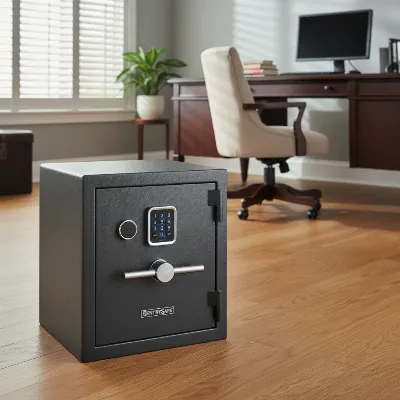 SentrySafe SFW123GDC digital fire and waterproof home safe for essential document protection
Viking Security Safe VS-20BLX Mini Biometric Safe
For quick and highly secure access, the Viking Security Safe VS-20BLX is an excellent compact biometric option. It features a sophisticated biometric fingerprint reader that allows you to open the safe in seconds. Made from solid steel with pry-resistant concealed hinges, it’s ideal for small valuables, medication, or a handgun that requires immediate access.
- Advantages: Fast biometric access, robust steel construction, compact size for discreet placement.
- Disadvantages: Smaller capacity, primary focus on anti-theft rather than fire/water resistance, requires batteries.
- User Reviews: Highly valued for its rapid access and strong build, making it a favorite for personal security items.
Amazon Basics Steel Security Safe (25EI)
If you’re on a tighter budget but still need reliable security for your everyday valuables, the Amazon Basics Steel Security Safe (25EI) offers a cost-effective solution. This simple digital keypad safe is made from solid steel and includes pre-drilled holes for mounting to a floor or wall, providing a good deterrent against theft for general home use.
- Advantages: Affordable, easy-to-use digital keypad, includes mounting hardware for enhanced security.
- Disadvantages: Lacks fire and water resistance, thinner steel compared to higher-end models, basic security features.
- User Reviews: Commended for its value for money and suitability for basic security needs, particularly when bolted down.
Comparison Table
Here’s a detailed comparison of the top recommended safe boxes:
| Feature | SentrySafe SFW123GDC | Viking Security Safe VS-20BLX | Amazon Basics 25EI |
|---|---|---|---|
| Price Range | Mid-High | Mid-Range | Low |
| Size (External) | Medium (1.23 cu ft) | Small (0.47 cu ft) | Small (0.8 cu ft) |
| Security (Burglary) | Basic (Pry-resistant) | Moderate (Solid steel, pry-resistant) | Basic (Steel, mountable) |
| Fire Resistance | UL Classified 1-hr at 1700°F | None | None |
| Water Resistance | ETL Verified (24hrs, 8 inches) | None | None |
| Lock Type | Digital with Key Backup | Biometric with Keypad/Key Backup | Digital with Key Backup |
| Ideal For | Documents, Valuables, Digital Media | Quick access, Small valuables, Firearms | General valuables, Deterrent |
| Weight | Heavy (approx. 87 lbs) | Moderate (approx. 20 lbs) | Light (approx. 20 lbs) |
Buying Guide
Acquiring a safe box is a significant decision for your home security. Knowing where to purchase and what precautions to take will ensure a satisfactory and secure investment.
Where to Buy a Safe Box?
Finding a reputable vendor is crucial for ensuring product quality and support.
- Specialized Safe Dealers/Locksmiths: These experts can provide tailored advice, offer a wider range of high-security options, and often include professional installation services. They are excellent resources for understanding specific security certifications and features.
- Online Retailers: Platforms like Amazon, Walmart, and the manufacturers’ direct websites offer convenience and competitive pricing. Always verify the seller’s reputation and check product specifications carefully before purchasing. Read customer reviews for real-world insights.
Considerations When Buying a Safe Box
Once you’ve identified potential safe boxes, a few final checks are essential to ensure you make the best purchase.
- Inspect the product thoroughly: If buying in person, check for any signs of damage, ensure the door mechanism operates smoothly, and that the locking system feels robust. For online purchases, carefully review product images and detailed descriptions.
- Choose reputable brands: Stick to well-known manufacturers with a history of producing quality security products. Brands like SentrySafe, Yale, Honeywell, and Viking are generally trusted in the market.
- Read the warranty and return policy: Understand what the warranty covers and for how long. Familiarize yourself with the return policy, especially for larger items, in case the safe doesn’t meet your expectations or needs.
- Consider professional installation: For heavier, freestanding safes, or those intended to be built into walls or floors, professional installation is highly recommended. Properly anchoring a safe to the floor or wall significantly increases its burglary resistance by preventing thieves from simply carrying it away.
“A home safe is not just a container; it’s a commitment to protecting what truly matters. Investing in the right one means peace of mind, knowing your irreplaceable items are secured against life’s uncertainties.” – John Smith, Security Expert
Conclusion
Choosing the right home safe box is a critical decision that enhances your overall security. By carefully assessing your needs, understanding the various types and their features, and adhering to important selection criteria like security ratings, fire/water resistance, and lock mechanisms, you can make an informed choice. Whether you prioritize advanced anti-theft capabilities, robust fire and water protection, or a balance of both, the market offers a solution for every homeowner. Invest wisely in a quality safe box, and enjoy the lasting peace of mind that comes with knowing your most valuable possessions are well-protected. What valuable items are you looking to safeguard today?
Frequently Asked Questions
What is the ideal location for a home safe?
The ideal location for a home safe is often discreet, out of plain sight, and securely anchored. Common spots include inside a closet, bolted to a concrete floor in a basement, or even concealed within furniture. Avoid obvious places like the master bedroom closet or living room.
How often should I change my safe’s combination or batteries?
For electronic safes, it’s recommended to change the batteries annually or whenever the low battery indicator appears. For combination locks, changing the combination every 1-2 years or after a significant life event (e.g., a move or change in household members) adds an extra layer of security.
Are all fireproof safes also waterproof?
No, not all fireproof safes are also waterproof. Fire and water resistance are distinct features. A safe might be designed to withstand high temperatures but not be sealed against water intrusion. Always check for separate fire and water resistance ratings (e.g., UL Classified for fire and ETL Verified for water protection).
What do UL ratings for safes mean?
UL (Underwriters Laboratories) ratings indicate a safe’s tested resistance against specific threats. For example, a UL Class 350-1 Hour fire rating means the internal temperature will remain below 350°F for one hour when exposed to external temperatures of up to 1700°F. Burglary ratings (e.g., RSC – Residential Security Container) signify the safe’s ability to resist forced entry for a specified duration using common tools.
Can a home safe protect against all types of threats?
While a high-quality home safe offers significant protection against common threats like theft, fire, and water damage, no safe is entirely impregnable against all forms of attack. Extremely determined and skilled criminals with specialized tools and unlimited time could potentially breach any safe. The goal is to provide enough resistance to deter most threats and significantly slow down professional ones, often leading them to abandon their attempts.
