In an unpredictable world, safeguarding your invaluable cash and critical documents from unforeseen disasters like fires and floods is paramount. Imagine the peace of mind knowing your family’s vital records, irreplaceable keepsakes, and hard-earned cash are shielded, even when the worst happens. Investing in a high-quality waterproof and fireproof safe box isn’t just a precaution; it’s an essential strategy for comprehensive asset protection. This guide will walk you through everything you need to know to select the perfect safe box that offers robust defense against both water and fire, ensuring your most precious possessions remain secure and intact.
Understanding Waterproof and Fireproof Safe Boxes
Protecting your valuables requires understanding the specialized defenses that safe boxes offer. While often grouped, “fireproof” and “waterproof” denote distinct, yet equally vital, layers of protection, crucial for preserving items like cash, deeds, and family photographs against environmental threats.
Why You Need Both Fire and Water Protection
|
Our Picks for the Best Safe Box in 2026
As an Amazon Associate I earn from qualifying purchases.
|
||
| Num | Product | Action |
|---|---|---|
| 1 | SentrySafe Fireproof Safe with Key Lock, Chest Lock Box for Home or Travel Secures Money, Documents, 0.18 Cubic Feet, 6.1 x 14.3 x 11.2 Inches, 1210 |

|
| 2 | DocSafe 5200°F Document Organizer with Lock, Upgraded Heat Insulated Fireproof&Water-Resistant Box 8 Layers File Organizer, Portable Home Travel Safe Storage for Important Documents and More |
|
| 3 | SentrySafe Fireproof Safe Box with Key Lock, Chest Safe with Carrying Handle to Secure Money, Jewelry, Documents, 0.25 Cubic Feet, 6.3 x 15.3 x 12.1 Inches, 1160 |
|
| 4 | Yuanshikj Safe Box with Key Lock, Steel Security Lock Box, 0.23 Cubic Feet, 9.1" W x 6.7" D x 6.7" H, Small Hidden Safe for Home Office Cash Jewelry Storage (BLACK) |
|
| 5 | KYODOLED Fireproof Document Box with Key Lock, Small Lock Boxes for Personal Items, Fire and Water Resistance, Fireproof Safe Box for Documents, Jewelry, Passport, Cash, 12.6'' x 8.3'' x 4.3'' Black |
|
| 6 | Amazon Basics Steel Home Security Safe Box with Electronic Keypad Lock for Documents, Jewelry, Valuables, 1.8 Cubic Feet, Black, 13.8"W x 13"D x 19.7"H |
|
| 7 | Amazon Basics Steel Security Safe and Lock Box with Digital Keypad, Easy to Use, Removable Shelf, Secure Cash, Jewelry, Documents, Black, 1.2 Cubic Feet, 16.9-x-14.6-x-10.6-inches (WxDxH) |
|
| 8 | KYODOLED Cash Box with Combination Lock Safe Metal Money Box with Money Tray for Security Lock Box 7.87"x 6.30"x 3.35" Black |
|
| 9 | SentrySafe Black Fireproof and Waterproof Safe, File Folder and Document Box with Key Lock, Ex. 14.3 x 15.5 x 13.5 inches, HD4100 |
|
| 10 | Amazon Basics Steel Security Safe and Lock Box with Electronic Keypad, Secure Documents Storage, Black, 0.5 Cubic Feet, 13.8" W x 9.8" D x 9.8" H, Removable Shelf |
|
Modern homes face a myriad of threats, from accidental kitchen fires to severe weather events causing flash floods or burst pipes. Relying solely on a fire-resistant safe leaves your valuables vulnerable to water damage from extinguishing efforts or natural disasters. Conversely, a waterproof-only container might melt or fail in extreme heat. A safe box combining both fire and water protection offers comprehensive security, shielding contents from charring, smoke, and saturation, thereby safeguarding your peace of mind.
Key Certifications and Ratings
When evaluating a safe box, certifications from independent testing organizations are your most reliable indicators of its protective capabilities. These ratings verify a safe’s ability to perform under extreme conditions, providing objective evidence of its resilience.
Fire Resistance Ratings (Temperature, Duration)
No safe is truly “fireproof”; they are “fire-resistant,” meaning they can withstand specific external temperatures for a set duration while maintaining an internal temperature below a critical threshold. The most widely recognized standard comes from Underwriters Laboratories (UL), specifically the UL 72 classification. A common rating, for instance, might be “UL Classified for 1 hour at 1700°F (927°C),” meaning the internal temperature of the safe will remain below 350°F (177°C)—the point at which paper begins to char—for at least one hour while exposed to external temperatures of 1700°F. Always check the specific duration and temperature rating to match the potential risks in your area.
Water Resistance Ratings (Submersion Depth, Duration)
Water resistance ratings typically indicate how well a safe can prevent water ingress. The ETL Verified mark is a prominent certification for water protection. For example, a rating of “ETL Verified for 72 hours of protection in 8 inches of water” means the safe has been tested to keep its contents dry even when submerged at that depth for three days. These seals are essential not just for floods, but also for protection against sprinkler systems, firefighting hoses, or even internal plumbing leaks. An airtight seal around the door is a hallmark of superior water protection.
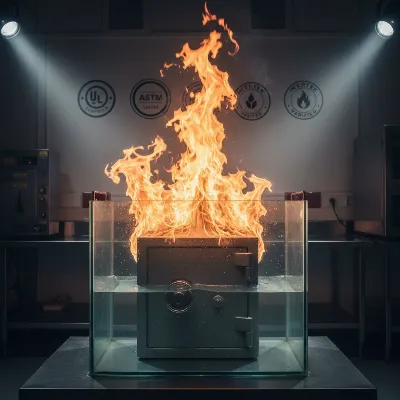 Waterproof fireproof safe box undergoing fire and water testing for documents and cash
Types of Safe Boxes for Enhanced Protection
Choosing the right safe box often comes down to balancing portability, capacity, and the level of security you require. Both compact chests and larger bolted-down safes offer robust protection, but they cater to different user needs and environmental risks.
Compact/Portable Waterproof & Fireproof Chests
Compact waterproof and fireproof chests are designed for convenience and ease of transport. Typically smaller and lighter, these units are ideal for storing critical documents like passports, birth certificates, and small amounts of cash or jewelry that you might need to grab quickly in an evacuation. Many models include a carry handle for added portability.
- Advantages:
- Portability: Easy to move during emergencies or if you relocate frequently.
- Cost-Effective: Generally more affordable than larger, heavier safes.
- Ideal for Documents: Perfectly sized for letter-sized papers, digital media, and small valuables.
- Disadvantages:
- Limited Security Against Theft: Their lighter weight makes them easier for determined thieves to carry away, though some can still be quite heavy.
- Smaller Capacity: Not suitable for large collections of valuables or bulky items.
Larger Home/Office Waterproof & Fireproof Safes
Larger home and office safe boxes offer a significant step up in security and capacity. These safes are typically much heavier and often come with pre-drilled holes to bolt them to the floor or wall, providing superior theft deterrence. They are designed for a broader range of valuables, including larger cash stashes, extensive document collections, firearms, and bulky jewelry.
- Advantages:
- Higher Security: Heavier construction, advanced locking mechanisms, and the ability to bolt down make them extremely difficult for thieves to remove or breach.
- Greater Capacity: Ample space for numerous documents, larger electronics, and more substantial valuables.
- Enhanced Organization: Often include interior shelving, drawers, and organizational features.
- Disadvantages:
- Less Portable: Due to their weight and secure installation, they are not easily moved.
- Higher Cost: Reflects the increased security features, materials, and size.
How to Choose Your Ideal Waterproof Safe Box
Selecting the perfect waterproof safe box involves a thoughtful assessment of what you need to protect, where the safe will be located, and the specific features that align with your security priorities. A well-chosen safe offers long-term peace of mind.
Assess Your Needs: What to Protect and Where
Before diving into product specifications, take stock of your valuables and potential threats. This initial assessment will narrow down your options considerably, ensuring the safe you choose genuinely meets your requirements.
Types of Valuables
Consider all the items you plan to store. For paper documents like birth certificates, passports, and deeds, a safe rated for at least 30-60 minutes at 1550°F to 1700°F and with robust waterproofing is sufficient, as paper chars around 350°F. Digital media such as USB drives, external hard drives, and old photographs require lower internal temperatures, often below 125°F or 150°F, as they are more sensitive to heat. Cash and jewelry are generally more resilient but still benefit from both fire and water protection.
Location and Environmental Risks
Where will your safe be placed? If it’s in a basement prone to flooding, superior waterproofing is non-negotiable. For homes in wildfire-prone areas, a higher fire rating is crucial. Consider local fire department response times; a longer rating offers more protection in rural areas. Also, think about theft risk; a heavier, bolt-down safe is better for high-value items, while a portable chest might suffice for less tempting valuables.
Budget Considerations
Safe boxes range widely in price, from under $100 for basic chests to several hundred or even thousands for larger, high-security vaults. Determine a realistic budget, but remember that the cost of replacing irreplaceable items far outweighs the investment in a quality safe. Prioritize certifications and tested performance over just the lowest price.
Essential Features to Look For
Once you understand your needs, focus on the specific features that provide the best protection and usability. These elements differentiate a good safe from a truly excellent one.
Locking Mechanisms
The locking mechanism impacts both security and convenience. Key locks are simple and reliable but require careful key management. Digital keypads offer quick access with a customizable code, often with a backup key for emergencies. Biometric locks (fingerprint scanners) provide the fastest access but can be more expensive and may require batteries. For maximum security, some safes combine multiple locking methods.
Construction Materials and Durability
High-quality safes are typically constructed from thick steel, providing robust resistance against physical attacks. Look for features like pry-resistant hinge bars and multiple live-locking bolts that extend into the safe body when locked, making forced entry incredibly difficult. Fire resistance is achieved through specialized insulation, often fire-activated gypsum fireboard, strategically placed between steel walls. For waterproofing, a high-quality intumescent seal that expands when exposed to heat is vital, creating a tight barrier against both flames and water.
> “The true value of a safe isn’t just in what it protects, but in how it’s built. Look for solid steel, strong bolts, and seals that actively respond to heat. These details are what separate true security from mere illusion.” – Sarah Chen, Certified Safe Specialist
Size and Capacity
Always consider the internal dimensions, as external measurements can be misleading due to thick insulation. List everything you intend to store and allow for future additions. For documents, ensure the internal space can accommodate letter or legal-sized papers flat, or if it has hanging file folder rails, that they fit your standard folders. Overpacking a safe can sometimes compromise its seals, so ensure adequate space.
Organizational Features
Interior organization can greatly enhance a safe’s usability. Look for adjustable shelves, interior lights, locking drawers for smaller items, and elastic straps on the inside of the door for holding USB drives or keys. Safes designed for documents may include hanging file folder rails for easy categorization.
Warranty and Customer Support
Reputable manufacturers often offer excellent warranties, including lifetime after-fire replacement guarantees. This means if your safe is damaged in a fire, the company will replace it for free, often along with compensation for the contents. This demonstrates a strong commitment to product reliability and customer trust.
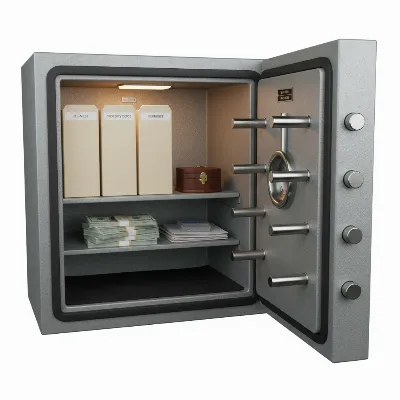 Interior of a waterproof fireproof safe box with organized documents and cash
Top Waterproof Safe Boxes for Cash and Documents
Based on rigorous testing and user feedback, several models consistently stand out for their superior combined fire and water protection, making them excellent choices for safeguarding your most critical assets.
SentrySafe HD4100 Fireproof Safe
The SentrySafe HD4100 is widely acclaimed as an excellent choice specifically for document protection, often passing both stringent fire and water tests. This model is ETL Verified to remain waterproof when submerged for up to 72 hours and UL Classified for fire endurance, protecting contents in temperatures up to 1,550°F (843°C) for 30 minutes. Its document-style design is perfect for important papers. While its primary focus is on elemental protection, its sturdy build provides a good deterrent against casual theft. Users appreciate its reliability and compact size for easy placement.
SentrySafe SFW123GDC Waterproof and Fireproof Digital Safe
For those seeking robust security against both burglary and environmental threats, the SentrySafe SFW123GDC is a top contender. This safe typically offers 1 hour of fire protection at 1700°F (927°C) and ETL Verified water protection for 24 hours in up to 8 inches of water. It features a digital keypad lock, multiple live-locking bolts, and a pry-resistant hinge bar, making it exceptionally difficult to break into. Its heavier weight (often around 90 lbs) also acts as a significant theft deterrent, and it can be bolted down for added security. Many users highlight its impressive durability and the peace of mind it provides for a range of valuables.
Honeywell 1114 Waterproof and Fireproof Chest
The Honeywell 1114 is a popular choice for its balance of portability and strong protection, especially for documents and smaller valuables. This chest is UL classified for 30 minutes of fire protection at 1550°F (843°C) and ETL verified for 100 hours of water protection when fully submerged. Its convenient carry handle makes it an excellent “grab-and-go” option for emergencies. While it offers good protection against fire and water, it is generally less resistant to physical break-ins compared to larger, heavier safes. Honeywell also provides a lifetime after-fire replacement guarantee.
Comparison Table: Top Waterproof Safes
| Model | Price Range | Fire Rating | Water Rating | Lock Type | Capacity (cu ft) | Weight (lbs) | Key Features |
|---|---|---|---|---|---|---|---|
| SentrySafe HD4100 Fireproof Safe | Mid | UL 30 mins @ 1550°F | ETL 72 hrs submerged | Key | ~0.61 | ~39 | Document-style, hanging file rails, portable |
| SentrySafe SFW123GDC Digital Safe | Mid-High | UL 1 hr @ 1700°F | ETL 24 hrs in 8″ water | Digital/Key | ~1.23 | ~87 | Digital keypad, live-locking bolts, pry-resistant hinge, bolt-down hardware |
| Honeywell 1114 Waterproof and Fireproof Chest | Low-Mid | UL 30 mins @ 1550°F | ETL 100 hrs submerged | Key | ~0.17 | ~27 | Portable with handle, lifetime after-fire guarantee, compact |
Purchasing Your Waterproof Safe Box
Making an informed purchase involves knowing where to find reliable products and what final checks to perform before committing. Your careful consideration now will prevent potential regrets later.
Where to Buy
You have several avenues for purchasing a waterproof safe box, each with its advantages.
- Online Retailers: Major online platforms like Amazon, Walmart, and the manufacturers’ official websites (e.g., SentrySafe, Honeywell) offer a wide selection, competitive pricing, and user reviews. Be sure to check seller reputation and return policies.
- Specialty Safe Stores: Local safe and vault dealers provide expert advice, professional installation services (especially for heavier models), and often have a broader range of high-security options. They can also assist with specific customization needs.
- Large Retail Chains: Home improvement stores and department stores may carry a limited selection of entry-level to mid-range safe boxes.
Important Considerations Before Buying
Before finalizing your purchase, a few critical steps can help ensure you’re making the best decision for your security needs.
- Check Product Specifications Thoroughly: Double-check all listed fire and water ratings. Do they match your requirements? Pay attention to both external and internal dimensions.
- Verify Certifications: Look for the UL and ETL logos and cross-reference them with the manufacturer’s claims. Authentic certifications ensure the product has undergone rigorous testing.
- Read Warranty Information: Understand the warranty terms, especially regarding after-fire replacement guarantees. Knowing you’re covered post-disaster offers an extra layer of protection.
- Consider Installation: For heavier safes, plan how you will move and install it. Professional installation may be necessary to bolt down the safe properly.
Conclusion
Choosing the best waterproof safe box for your cash and documents is a proactive step towards safeguarding what matters most. By prioritizing certified protection against both fire and water, assessing your specific storage needs, and carefully evaluating features like locking mechanisms and capacity, you can make an informed decision. Investing in a high-quality safe from reputable brands like SentrySafe or Honeywell provides robust defense, ensuring peace of mind that your irreplaceable documents and valuables are protected from life’s unpredictable events. What steps will you take today to secure your most cherished possessions?
Frequently Asked Questions (FAQ)
How often should I air out a waterproof safe?
Waterproof and fireproof safes are often airtight, which can lead to moisture buildup and condensation. It is recommended to air out your safe every few weeks or months, especially if stored in humid conditions, to prevent mold or mildew.
Can a waterproof safe protect electronics?
Yes, many waterproof safes are designed to protect electronics from water damage. However, for extreme fire protection, digital media requires a safe rated to keep internal temperatures below 125°F to prevent data corruption, which is a more stringent standard than for paper.
What’s the difference between fire-resistant and fireproof?
No consumer-grade safe is truly “fireproof” as they can eventually succumb to extreme heat. Safes are “fire-resistant,” meaning they are engineered to maintain a safe internal temperature for a specified duration when exposed to external fires, protecting contents from damage within that timeframe.
Is bolting down a waterproof safe advisable?
Bolting down a waterproof safe is highly advisable for larger models, as it significantly enhances security by preventing thieves from easily removing the safe from your property. This practice adds an extra layer of theft deterrence, complementing the safe’s elemental protection.
How do I know the safe is truly waterproof?
To ensure a safe is genuinely waterproof, look for independent certifications like ETL Verified ratings, which specify the duration and depth of submersion the safe can withstand while keeping contents dry. A continuous, high-quality door seal is also a key indicator of superior water protection.
