In an unpredictable world, safeguarding your most cherished possessions is paramount. While many security solutions exist, few offer the unparalleled blend of concealment and robust protection that a floor safe provides. Imagine a secure vault, seamlessly integrated into your home, hidden beneath your carpet or flooring, completely out of sight from prying eyes. This article delves into the world of floor safes, exploring why they are a superior choice for discreet security, the essential features to look for, and a selection of top models designed to keep your valuables protected and perfectly camouflaged. Whether you’re securing important documents, precious jewelry, or emergency cash, a well-chosen and expertly installed floor safe offers ultimate peace of mind.
Understanding Floor Safe Boxes
Floor safe boxes represent a pinnacle of discreet home security, designed to vanish into your living space while providing formidable protection. Unlike freestanding safes that can be moved or stand out, floor safes are permanently embedded, making them exceptionally difficult for intruders to locate and even harder to remove.
What Makes a Floor Safe Ideal for Concealment?
|
Our Picks for the Best Safe Box in 2026
As an Amazon Associate I earn from qualifying purchases.
|
||
| Num | Product | Action |
|---|---|---|
| 1 | KYODOLED Fireproof Document Box with Key Lock, Small Lock Boxes for Personal Items, Fire and Water Resistance, Fireproof Safe Box for Documents, Jewelry, Passport, Cash, 12.6'' x 8.3'' x 4.3'' Black |

|
| 2 | SentrySafe Fireproof Safe Box with Key Lock, Chest Safe with Carrying Handle to Secure Money, Jewelry, Documents, 0.25 Cubic Feet, 6.3 x 15.3 x 12.1 Inches, 1160 |
|
| 3 | SentrySafe Black Fireproof and Waterproof Safe, File Folder and Document Box with Key Lock, Ex. 14.3 x 15.5 x 13.5 inches, HD4100 |
|
| 4 | Amazon Basics Steel Home Security Safe Box with Electronic Keypad Lock for Documents, Jewelry, Valuables, 1.8 Cubic Feet, Black, 13.8"W x 13"D x 19.7"H |
|
| 5 | Yuanshikj Safe Box with Key Lock, Steel Security Lock Box, 0.23 Cubic Feet, 9.1" W x 6.7" D x 6.7" H, Small Hidden Safe for Home Office Cash Jewelry Storage (BLACK) |
|
| 6 | SentrySafe Fireproof Safe with Key Lock, Chest Lock Box for Home or Travel Secures Money, Documents, 0.18 Cubic Feet, 6.1 x 14.3 x 11.2 Inches, 1210 |
|
| 7 | Amazon Basics Steel Security Safe and Lock Box with Digital Keypad, Easy to Use, Removable Shelf, Secure Cash, Jewelry, Documents, Black, 1.2 Cubic Feet, 16.9-x-14.6-x-10.6-inches (WxDxH) |
|
| 8 | DocSafe 5200°F Document Organizer with Lock, Upgraded Heat Insulated Fireproof&Water-Resistant Box 8 Layers File Organizer, Portable Home Travel Safe Storage for Important Documents and More |
|
| 9 | KYODOLED Cash Box with Combination Lock Safe Metal Money Box with Money Tray for Security Lock Box 7.87"x 6.30"x 3.35" Black |
|
| 10 | Amazon Basics Steel Security Safe and Lock Box with Electronic Keypad, Secure Documents Storage, Black, 0.5 Cubic Feet, 13.8" W x 9.8" D x 9.8" H, Removable Shelf |
|
The primary appeal of a floor safe lies in its ability to remain entirely out of sight. Once installed flush with the subfloor and covered by carpet, rugs, or even furniture, these safes become virtually undetectable. This inherent concealment is a significant deterrent, as a burglar cannot steal what they cannot find. It offers a level of anonymity that other safe types simply cannot match, blending seamlessly into your home’s existing aesthetic without drawing any attention.
Benefits of Floor Safes
Choosing a floor safe brings several distinct advantages for home security:
- Superior Concealment: The most obvious benefit is the safe’s ability to be hidden. Covered by carpeting, a rug, or even a piece of furniture, it adds an invisible layer of security to your home. Burglars often operate quickly, and a hidden floor safe significantly increases the time and effort required to find and access valuables, often leading them to give up.
- Enhanced Burglary Protection: Once installed, a floor safe is encased in concrete, creating an exceptionally strong barrier against forced entry. This concrete surround makes prying, drilling, or cutting into the safe incredibly difficult, far more so than a standalone safe. The sheer weight and immobility also prevent thieves from simply carrying the safe away.
- Natural Fire Resistance: Heat and flames naturally rise. By being installed below ground level and surrounded by concrete, floor safes benefit from a natural insulation effect, offering inherent fire resistance. This positioning often allows them to outperform some of the best fire safes in similar conditions, safeguarding documents and irreplaceable items from extreme heat.
Limitations to Consider
While floor safes offer compelling security advantages, it’s important to be aware of their potential drawbacks:
- Accessibility: Due to their hidden nature and the effort required to uncover and open them, floor safes are best suited for items you don’t need to access frequently. Daily-use valuables might be better stored in a more accessible location, perhaps a wall safe. You will need to bend or kneel to operate the lock.
- Water Resistance: While the concrete surround aids in fire protection, floor safes are not inherently waterproof. In the event of a major flood or a fireman’s hose, water can potentially seep inside. It is highly recommended to store all moisture-sensitive items, such as documents or electronics, in sealed waterproof bags or containers within the safe.
- Installation Complexity: Installing a floor safe requires significant effort, often involving cutting into an existing concrete slab and pouring new concrete. This can be a messy and time-consuming process, making professional installation a common choice, especially in established homes.
Key Features to Look For
Selecting the right floor safe involves evaluating several critical features that contribute to its overall security, durability, and convenience.
Construction and Durability
The foundational elements of a floor safe dictate its strength against forced entry. Look for models constructed from heavy-gauge steel, with bodies that are often reinforced by concrete during installation. The door thickness is particularly vital; a minimum of ½-inch thick steel plate is recommended for robust protection against cutting and prying attacks. Additionally, features like re-lockers are crucial. These internal mechanisms are designed to trigger and secure the safe’s bolts permanently if the lock is attacked, making it incredibly difficult for a burglar to open even if they manage to compromise the primary locking mechanism.
Locking Mechanisms
Floor safes typically come with two main types of locking mechanisms, each offering distinct advantages:
- Mechanical Dial Locks: These traditional locks are known for their exceptional reliability. They do not require batteries, making them immune to electronic failures and ensuring access even during power outages. For those prioritizing long-term, low-maintenance security, a mechanical dial lock is an excellent choice.
- Electronic Keypad Locks: Offering speed and convenience, electronic keypads allow for quick access with a user-defined code. Many models include reliable backup options, such as a physical key or an external battery pack, to prevent lockout in case of battery depletion or electronic malfunction.
Fire and Water Protection
Beyond resisting theft, a good floor safe should also protect against environmental hazards.
- Fire Protection: As previously noted, the concrete encasement provides significant natural fire resistance, as heat tends to rise away from the safe. Many floor safes also come with specific UL (Underwriters Laboratories) fire ratings, indicating how long they can protect contents at certain temperatures. For example, some offer 1-hour or even 2-hour fire protection, crucial for sensitive documents and data.
- Water Protection: While complete waterproofing is rare in floor safes, some models feature water-resistant seals around the door to help mitigate damage from minor leaks or spills. However, for absolute protection against moisture, always store valuables in sealed, waterproof containers or bags inside the safe.
Size and Capacity
Consider what you intend to store in the safe. Safes come in various sizes and capacities, from compact units ideal for passports and cash to larger options that can accommodate multiple documents, small electronics, or even firearms. Interior features like felt lining can protect delicate items from scratches, while adjustable shelving helps organize contents efficiently. Ensure the safe’s dimensions, once installed, will not interfere with the concealment strategy or the room’s usability.
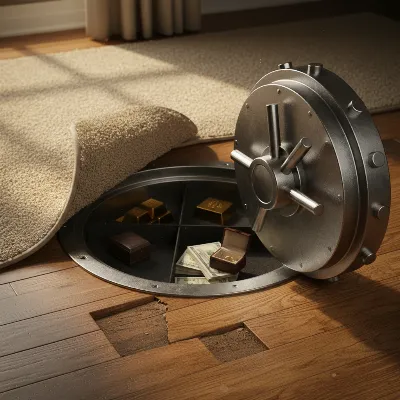 An open floor safe hidden beneath a pulled-back carpet, revealing its robust metal interior and lock mechanism, in a discreet home setting.
Top Floor Safe Boxes to Consider
For those looking to integrate a high-security, hidden storage solution into their home, several floor safe models stand out for their features, durability, and security.
Protex PFS1814FL Fireproof Floor Safe
The Protex PFS1814FL is designed with a strong emphasis on fire safety and robust construction. This model boasts one of the highest UL fire ratings in its class, providing 2-hour fire protection. Its construction combines heavy steel with reinforced concrete, offering superior defense against heat, water, and impact. Equipped with a reliable combination dial lock, it eliminates the need for batteries, ensuring consistent access. The robust build makes it an excellent choice for safeguarding critical documents like wills, deeds, and passports, offering exceptional peace of mind even in disaster scenarios. Its dimensions are designed for effective underfloor concealment.
First Alert 2087F Steel Security Safe
The First Alert 2087F offers a balanced combination of fire protection and solid steel security. This safe is noted for its 1-hour fire protection rating and a reinforced solid steel body, making it ideal for both homeowners and small businesses. It features a dependable mechanical combination lock, removing any reliance on electronic components. The thick steel door and concealed hinges are specifically engineered to resist tampering and prying attempts. With a spacious interior, it can comfortably accommodate documents, passports, and small electronics, and its design is well-suited for discreet installation under rugs or floorboards.
Hayman FS4000B Polyethylene In-Floor Safe
The Hayman FS4000B stands out for its unique polyethylene body, which provides excellent rustproof and leak-resistant qualities, an important consideration for floor installations. It features a UL Listed Group II Dial Combination Lock, ensuring a high level of security and reliability. This safe offers the flexibility of upgrading to a 1-inch thick steel door for double the security, enhancing its resistance against cutting or prying attacks. Its construction makes it a durable and long-lasting option, particularly well-suited for environments where moisture might be a concern.
Tracker FS051508-K Miniature Floor Safe
For those seeking a compact and budget-friendly option without compromising core security, the Tracker FS051508-K is an excellent choice. This miniature floor safe is one of the smallest available, making it exceptionally easy to conceal. It features a sturdy key lock connected to two ¾-inch door bolts, providing heavy-duty security for its size. The interior is lined with a soft felt carpet, protecting stored items like handguns or other valuables from scratches. While smaller, it offers a reliable solution for discreetly hiding essential belongings under the floor or carpet, perfect for small valuables or emergency cash.
Floor Safe Comparison Table
| Feature | Protex PFS1814FL | First Alert 2087F | Hayman FS4000B | Tracker FS051508-K |
|---|---|---|---|---|
| Lock Type | Combination Dial | Mechanical Combination | UL Listed Group II Dial | Key Lock |
| Fire Rating | 2-hour UL | 1-hour | (Concrete Dependent) | (Concrete Dependent) |
| Water Resistance | Reinforced Concrete | Solid Steel Body | Leak-Resistant Polyethylene | Standard |
| Door Thickness | Heavy Steel | Thick Steel | Optional 1″ Thick | ¾” Door Bolts |
| Best For | Critical Documents, High Fire Protection | Homeowners, Small Business | Moisture-Prone Areas, High Security | Small Valuables, Budget-Friendly |
Installation Guide: Hiding Your Floor Safe Under Carpet
Proper installation is crucial for maximizing the security and concealment of your floor safe. While a professional installer is always recommended, understanding the process can help you prepare.
Choosing the Right Location
Selecting the ideal spot for your floor safe requires careful consideration:
- Concealment and Accessibility: Choose a location that allows for easy concealment under carpet, a rug, or heavy furniture, yet remains accessible to you when needed. Avoid areas that would require moving heavy appliances every time you need to open the safe.
- Avoiding Utilities: Before any cutting begins, meticulously identify the location of power lines, water pipes, gas lines, and data cables running beneath the floor. Damaging these can lead to significant hazards and costly repairs.
- Local Regulations: Always check local building codes and regulations before starting installation to avoid any legal issues or complications.
Step-by-Step Installation Process
Installing a floor safe typically involves these key steps:
- Preparation: Begin by carefully removing any carpet or flooring in the chosen area. Mark the precise outline for the hole, ensuring it is at least 6 to 12 inches (or 150mm) wider than the safe on all sides to allow for adequate concrete reinforcement. It’s advisable to remove the safe door and fill the interior with crumpled newspaper to prevent concrete and dust from entering the mechanism during installation. Test the safe’s combination or key mechanism multiple times before installation to ensure it functions correctly.
- Digging the Hole: Using appropriate tools, cut and dig a hole in the concrete slab. The depth should accommodate the height of the safe plus an additional 6 inches (or 75mm) for a concrete base and the thickness of any floor coverings.
- Pouring the Concrete Base: Pour a base layer of concrete, approximately 5-6 inches (or 100mm) thick, into the bottom of the hole and allow it to partially set. This provides a solid foundation for the safe.
- Positioning the Safe: Once the base is firm, add a layer of fine sand or gravel (about 1.25-1.5 inches) on top. Carefully lower the safe into the center of the hole, ensuring it is perfectly level and flush with the existing floor level, allowing for your chosen floor covering. Crucially, orient the safe so the lock or dial is in the most convenient direction for operation.
- Filling with Concrete: Fill the remaining space around the sides of the safe with a concrete mixture (typically 1 part cement, 2 parts sand, 4 parts ¾-inch rock). Pour in successive layers, tamping each layer down firmly to eliminate air pockets and ensure maximum strength. Be meticulous in cleaning any excess concrete from the safe’s dust cover before it hardens.
- Curing Time: After pouring, the concrete needs time to cure and settle. It is recommended to leave the safe undisturbed and uncovered for at least 7 days to allow the concrete to fully dry and strengthen.
Post-Installation Tips
After the concrete has fully cured, remove any protective internal materials like newspaper and allow the safe to ventilate for 24 hours before use. For continued moisture protection, always store sensitive items in sealed waterproof bags or containers inside the safe. Finally, carefully re-lay your carpet or chosen floor covering over the dust cover, ensuring it lies flat and completely conceals the safe. Placing furniture strategically over the area can further enhance its hidden nature.
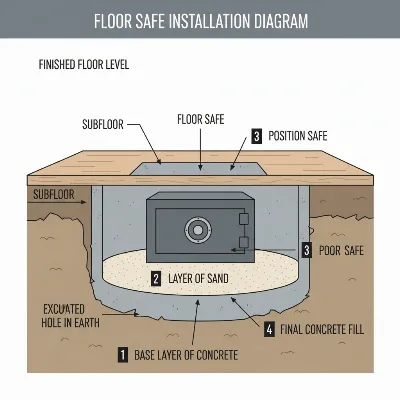 A detailed infographic illustrating the step-by-step installation of a floor safe into a concrete slab, showing layers of concrete, sand, and the safe itself.
“The ultimate security isn’t just about strength, it’s about invisibility. A floor safe, properly installed, is often the first line of defense simply because a thief can’t steal what they can’t find.” – John Dean, Owner, Dean Safe
Conclusion
Choosing the right floor safe is a strategic investment in the security of your most valuable possessions. These discreet guardians offer an unparalleled combination of robust physical protection and stealthy concealment, making them a formidable barrier against theft and even natural disasters like fire. By understanding the critical features—from heavy-gauge steel construction and reliable locking mechanisms to vital fire and water protection considerations—you can make an informed decision tailored to your specific needs. While the installation demands careful planning and execution, the enduring peace of mind provided by a well-hidden, fortified floor safe is truly invaluable.
Are you ready to elevate your home security with the ultimate hidden vault?
Frequently Asked Questions
Are floor safes truly fireproof?
Floor safes offer excellent natural fire resistance because they are encased in concrete below ground, where heat and flames tend to rise away from them. Many models also carry specific UL fire ratings. However, for maximum protection of highly sensitive items, storing them in additional fire-resistant pouches inside the safe is recommended.
Can I install a floor safe myself?
While it is possible for a skilled DIY enthusiast to install a floor safe, the process involves significant work, including cutting concrete, precise leveling, and pouring new concrete. It also requires careful identification of hidden utilities. For optimal security and to avoid potential damage or hazards, professional installation is often recommended.
What items are best stored in a floor safe?
Floor safes are ideal for items that are valuable but not needed for everyday access. This includes important documents (birth certificates, deeds, passports), irreplaceable family heirlooms, significant amounts of cash, precious jewelry, digital backup drives, and other small, high-value collectibles. Always store moisture-sensitive items in waterproof containers within the safe.
How do I access a floor safe hidden under carpet?
Accessing a floor safe hidden under carpet involves carefully pulling back the section of carpet or rug covering the safe. Once uncovered, you can open the safe using its key or combination lock. For optimal concealment and ease of access, choose a location where the carpet can be easily lifted or where a piece of furniture can be moved without major effort.
