In a world where securing your valuables and firearms is paramount, the ability to access them quickly and reliably can be a critical factor. Traditional safes often present a dilemma: security versus accessibility. Biometric safe boxes, however, bridge this gap, offering advanced fingerprint recognition technology that provides instant, secure access when every second counts. Whether for personal defense, emergency documents, or cherished heirlooms, a biometric safe is designed to keep your most important items protected yet readily available.
This comprehensive guide, informed by over a decade of hands-on experience with safe boxes, will walk you through the evolving landscape of biometric safe technology in 2026. We’ll delve into the different types available, key features to consider, top-rated models, common challenges, and essential buying tips to help you select the ideal solution for your needs. Join us as we explore how to optimally safeguard your assets with the perfect blend of security and quick access.
Understanding Biometric Safe Boxes for Quick Access
Biometric safe boxes represent the pinnacle of personal security storage, leveraging unique biological traits for identification. The most common and widely adopted method is fingerprint recognition, offering a seamless and swift entry mechanism. This technology eliminates the need to remember complex codes, fumble with keys, or struggle with traditional locks, making them ideal for situations requiring immediate access.
The core advantage of a biometric safe lies in its rapid deployment. In an emergency, such as a home invasion, seconds can determine outcomes. A quick-access biometric safe allows you to retrieve a firearm or other critical items with a simple touch, often within less than a second. This speed is crucial not just for self-defense but also for accessing medical information, emergency cash, or vital documents without delay. The technology has evolved significantly, boasting faster scanners, improved accuracy (often 508 DPI or higher), and the capacity for multiple user fingerprints, making them more reliable and versatile than ever before.
Types of Biometric Safe Boxes
Biometric safe boxes come in various forms, each designed to meet specific security and accessibility needs. Understanding these categories will help you narrow down the best option for your situation.
Handgun/Pistol Safes
These are typically compact and designed for discreet storage of one or two handguns. Their small footprint makes them perfect for bedside tables, under-seat mounting in vehicles, or inside drawers.
- Advantages: Extremely fast access (often under 0.5 seconds), compact, can be hidden easily. Many models feature slide-out mechanisms for immediate presentation of the firearm.
- Disadvantages: Limited storage capacity, often not fire or water-resistant due to their primary focus on quick access.
- Key Features: High-resolution fingerprint scanners, multiple backup entry methods (keypad, physical key), internal lighting, silent mode.
- Examples: SentrySafe QAP1BE, LANGGER V Biometric Slider Safe, Vaultek VT20i.
|
Our Picks for the Best Safe Box in 2026
As an Amazon Associate I earn from qualifying purchases.
|
||
| Num | Product | Action |
|---|---|---|
| 1 | SentrySafe Fireproof Safe with Key Lock, Chest Lock Box for Home or Travel Secures Money, Documents, 0.18 Cubic Feet, 6.1 x 14.3 x 11.2 Inches, 1210 |

|
| 2 | Amazon Basics Steel Security Safe and Lock Box with Electronic Keypad, Secure Documents Storage, Black, 0.5 Cubic Feet, 13.8" W x 9.8" D x 9.8" H, Removable Shelf |
|
| 3 | KYODOLED Cash Box with Combination Lock Safe Metal Money Box with Money Tray for Security Lock Box 7.87"x 6.30"x 3.35" Black |
|
| 4 | Amazon Basics Steel Security Safe and Lock Box with Digital Keypad, Easy to Use, Removable Shelf, Secure Cash, Jewelry, Documents, Black, 1.2 Cubic Feet, 16.9-x-14.6-x-10.6-inches (WxDxH) |
|
| 5 | SentrySafe Fireproof Safe Box with Key Lock, Chest Safe with Carrying Handle to Secure Money, Jewelry, Documents, 0.25 Cubic Feet, 6.3 x 15.3 x 12.1 Inches, 1160 |
|
| 6 | SentrySafe Black Fireproof and Waterproof Safe, File Folder and Document Box with Key Lock, Ex. 14.3 x 15.5 x 13.5 inches, HD4100 |
|
| 7 | DocSafe 5200°F Document Organizer with Lock, Upgraded Heat Insulated Fireproof&Water-Resistant Box 8 Layers File Organizer, Portable Home Travel Safe Storage for Important Documents and More |
|
| 8 | KYODOLED Fireproof Document Box with Key Lock, Small Lock Boxes for Personal Items, Fire and Water Resistance, Fireproof Safe Box for Documents, Jewelry, Passport, Cash, 12.6'' x 8.3'' x 4.3'' Black |
|
| 9 | Amazon Basics Steel Home Security Safe Box with Electronic Keypad Lock for Documents, Jewelry, Valuables, 1.8 Cubic Feet, Black, 13.8"W x 13"D x 19.7"H |
|
| 10 | Yuanshikj Safe Box with Key Lock, Steel Security Lock Box, 0.23 Cubic Feet, 9.1" W x 6.7" D x 6.7" H, Small Hidden Safe for Home Office Cash Jewelry Storage (BLACK) |
|
Rifle Safes
Larger and more robust, these safes are designed to store long guns like rifles and shotguns securely. They often include internal shelving for ammunition and accessories.
- Advantages: Accommodate multiple firearms, strong steel construction, often include anti-pry features.
- Disadvantages: Significant floor space required, heavier and less portable.
- Key Features: High-capacity fingerprint storage (e.g., up to 120 prints), thick steel gauge (e.g., 14-gauge), multi-point locking systems, pre-drilled holes for secure bolting.
- Examples: Barska Quick Access Biometric Rifle Safe, Barska HQ800 Standard Quick Access Keypad Biometric Rifle Safe.
Home/Office Safes
These versatile safes are designed for securing a broader range of valuables, including documents, jewelry, electronics, and cash. They vary widely in size, from small models for personal items to larger units that can house multiple binders.
- Advantages: Multi-purpose storage, often incorporate fire and water resistance ratings (though biometric models focused on quick access might prioritize speed over these heavier ratings), can be bolted to walls or floors for enhanced security.
- Disadvantages: Larger models can be quite heavy and less discreet, not always optimized for the fastest firearm access.
- Key Features: Durable alloy steel construction, motorized deadbolts, digital displays, tamper alarms.
- Examples: Viking Security Safe VS-20BLX Mini, TIGERKING Biometric Fingerprint Home Safe.
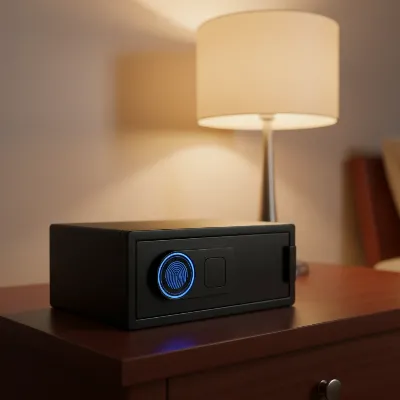 A sleek black biometric handgun safe with a fingerprint scanner on a wooden bedside table, a modern lamp in the background, low light, realistic style
Travel Safes
Designed for portability, these are lighter, more compact units that can be easily transported. They are ideal for securing items in hotels, vehicles, or during outdoor activities.
- Advantages: Lightweight, often feature security cables for tethering, meet TSA guidelines for firearm transport.
- Disadvantages: Lower level of security compared to fixed safes, limited capacity.
- Key Features: Rechargeable batteries, durable hard-case construction, foam lining, backup key access.
- Examples: ONNAIS Portable Gun Safe, Vaultek LifePod Electronic Lock Box.
Key Factors When Choosing a Biometric Safe Box
Selecting the right biometric safe box requires careful consideration of several factors beyond just quick access. An informed choice ensures your valuables are secure and accessible exactly when needed.
Access Speed & Reliability
The primary reason for choosing a biometric safe is rapid access. Look for models with high-resolution fingerprint sensors (e.g., 508 DPI) that offer unlock speeds of less than 0.5 seconds. Read reviews for consistency and reliability, as some cheaper models may have issues with false rejections or slow scanning, especially with dirty or wet fingers. The best systems can store multiple fingerprints and different angles of the same finger to maximize recognition success.
Security Features
A biometric lock is only as strong as the safe it protects. Prioritize safes constructed from heavy-gauge steel (e.g., 16-gauge for handguns, 14-gauge or thicker for larger safes). Look for features like pry-resistant doors, solid steel locking bolts, and tamper-resistant hinges. Certifications like DOJ approval (for gun safes) or UL ratings for burglary resistance (e.g., RSC – Residential Security Container) indicate a higher level of physical security.
Backup Access Methods
No electronic system is infallible. A reliable biometric safe must include robust backup entry methods. A digital keypad for a programmable PIN code is crucial, providing an alternative if fingerprint recognition fails. Additionally, a physical key override is essential for situations where batteries die or the electronic system malfunctions. Ensure these backup keys are stored securely outside the safe.
Power Source & Battery Life
Biometric safes are electronic and rely on power, typically AAA or 9V batteries. Check the expected battery life (many last up to a year) and look for models with low-battery indicators. An external power input (e.g., USB port or AC adapter) can be a lifesaver if the internal batteries deplete, allowing you to power the safe externally to gain access.
Size & Capacity
Consider what you intend to store. If it’s a single handgun for bedside defense, a compact safe will suffice. For multiple firearms, documents, or larger valuables, you’ll need a safe with appropriate internal dimensions. Always measure the items you plan to secure and ensure the safe provides enough space, including any necessary padding.
Mounting Options
To prevent thieves from simply carrying off your safe, consider how it can be secured. Many safes come with pre-drilled holes for bolting to a floor, wall, or inside a cabinet. For handgun safes, options for under-desk or bedside table mounting offer both security and convenience.
Additional Features
- Internal Lighting: LED lighting helps visibility in low-light conditions.
- Silent Mode: Crucial for tactical situations, allowing the safe to open without beeps or alarms.
- Tamper Alerts: Some smart safes can notify you of unauthorized access attempts via an app.
- Fire & Water Resistance: While less common for small, quick-access biometric safes, some larger home/office models offer ratings for protection against fire (e.g., UL certified for 1 hour at 1700°F) or water. If these are priorities, ensure the safe has verified ratings.
Budget & Brand Reputation
Biometric safes range in price from budget-friendly options ($100-$200) to premium models with advanced features ($500+). Reputable brands like SentrySafe, Barska, Hornady, and Vaultek have a track record of reliability and customer support. Investing in a well-regarded brand often means better build quality, more consistent biometric performance, and reliable backup systems.
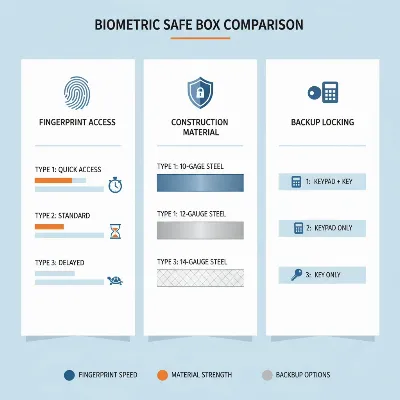 An infographic comparing key features of different biometric safe boxes, highlighting fingerprint speed, material, and backup options, clean and clear design
Top Biometric Safe Boxes for Quick Access
Here’s a look at some of the Best Biometric Safe Boxes For Quick Access In 2026, showcasing a range of applications and features.
Hornady RAPiD Safe Night Guard
This innovative safe offers a unique blend of quick access and discreet design, making it ideal for bedside use.
- Description: Resembling an alarm clock, the Night Guard provides touch-free entry via RFID tags (watchband, key fob, decals), a keypad, or physical key. It features a spring-assist drawer for rapid, upright firearm presentation.
- Pros: Extremely fast and versatile access methods (RFID is very convenient), discreet appearance, AC power with battery backup, internal lighting.
- Cons: Drawer is not padded (may require DIY padding for delicate items), not ideal for very large handguns.
- User Reviews: Praised for its reliability, ease of setup, and the convenience of RFID access.
SentrySafe QAP1BE Biometric Pistol Safe
A stalwart in personal security, SentrySafe continues to deliver robust and reliable biometric solutions.
- Description: Known for its solid steel construction and highly reliable fingerprint scanner (often under 0.5 seconds access), this safe is a popular choice for handgun owners. It includes a gas strut for quiet, single-handed access and multiple entry methods.
- Pros: Trusted brand, excellent fingerprint scanner reliability, robust steel construction, quiet operation, good balance of security and speed.
- Cons: May be slightly slower than some slider models, limited to one handgun.
- User Reviews: Highly rated for consistent fingerprint recognition and overall durability.
LANGGER V Biometric Slider Safe
For the fastest bedside access, the LANGGER V Slider stands out with its rapid deployment mechanism.
- Description: This safe features a 508 DPI biometric sensor for accurate and fast fingerprint processing (0.2 seconds) and stores up to 20 fingerprints. Its unique design slides out, presenting the firearm upright, making it exceptionally fast for emergencies. It’s made from heavy-duty 16-gauge carbon steel.
- Pros: Unmatched quick access with slider mechanism, high-resolution biometric sensor, multiple access methods (fingerprint, keypad, key), durable build.
- Cons: Requires specific mounting space (under a desk or nightstand), battery-powered (requires 4 AAA).
- User Reviews: Rave about its quick and reliable access, ease of setup, and quiet operation.
Barska Biometric Safe (Handgun Model AX11224)
Often cited as a top overall pick for handgun storage, the Barska Biometric Safe balances features and affordability.
- Description: This compact safe offers advanced security with a fingerprint recognition system that can store up to 30 fingerprints. It’s built with solid steel and includes pre-drilled holes for mounting.
- Pros: Good overall value, holds many fingerprints, reliable scanner, sturdy construction, battery life often lasts a full year.
- Cons: Not fire or waterproof, some users report a slightly longer scan time than premium models.
- User Reviews: Appreciated for its straightforward operation and strong security features for its price point.
Barska Quick Access Biometric Rifle Safe (AX12760)
For those needing to secure long guns, Barska offers a reliable biometric rifle safe.
- Description: This 52-inch safe can hold up to four rifles and has an internal shelf for accessories. It’s constructed from 14-gauge solid steel with three deadbolts, weighing 62 pounds for significant deterrence. Its biometric scanner can store up to 120 fingerprints.
- Pros: Large capacity for rifles, robust construction, high fingerprint storage, multiple access methods.
- Cons: Very heavy, not portable, may not have fire/water resistance.
- User Reviews: Praised for its spacious interior and solid build quality for rifle storage.
Vaultek VT20i Biometric Smart Hand Gun Safe
Representing the premium end, Vaultek combines smart technology with robust security.
- Description: A cutting-edge smart safe with biometric, keypad, and manual key access, plus smartphone app connectivity for monitoring, tamper alerts, and battery status. Features a rechargeable lithium-ion battery.
- Pros: Superior build quality, advanced smart features, very fast and reliable biometric scanner, internal lighting, excellent battery life.
- Cons: Higher price point, app integration may have a learning curve for some users.
- User Reviews: Highly valued for its integrated smart features, superior security, and responsive biometric system.
awesafe Gun Safe
For budget-conscious buyers, the awesafe Gun Safe provides a surprisingly robust option.
- Description: This compact safe offers biometric, keypad, and key access. It features a solid steel construction, interior LED light, and padded liner.
- Pros: Very affordable, multiple entry options, decent security for the price point, compact and portable.
- Cons: Biometric scanner reliability can be inconsistent compared to premium models, less robust build than higher-end safes.
- User Reviews: Often recommended as a good entry-level biometric safe, especially for its price.
Comparison Table
| Product Name | Best For | Access Methods | Material | Special Features | Price Range |
|---|---|---|---|---|---|
| Hornady RAPiD Safe Night Guard | Bedside Handgun | RFID, Keypad, Biometric, Key | Steel | Discreet design (alarm clock look), AC power, RFID tags | $$$ |
| SentrySafe QAP1BE | Reliable Handgun | Biometric, Keypad, Key | Solid Steel | Gas strut for quiet opening, proven reliability | $$ |
| LANGGER V Slider Safe | Fastest Bedside Handgun | Biometric (508 DPI), Keypad, Key | 16-gauge Carbon Steel | Slide-out mechanism, 0.2s access speed | $$ |
| Barska Biometric Safe | Overall Value Handgun | Biometric (up to 30 prints), Key | Solid Steel | Long battery life, good balance of features/cost | $ |
| Barska Biometric Rifle Safe | Multiple Rifles | Biometric (up to 120 prints), Keypad, Key | 14-gauge Steel | Large capacity (4 rifles), multi-point locking | $$$ |
| Vaultek VT20i | Premium Smart Handgun | Biometric, Keypad, Key, App | Heavy-duty Steel | Smart features (app alerts), rechargeable battery | $$$$ |
| awesafe Gun Safe | Budget-Friendly Handgun | Biometric, Keypad, Key | Solid Steel | Interior LED, padded liner | $ |
Price Range Guide: $: Under $150, $$: $150-$300, $$$: $300-$500, $$$$: $500+
Addressing Common Concerns with Biometric Safes
While biometric safe boxes offer unparalleled convenience, it’s important to be aware of potential issues and how to mitigate them.
Fingerprint Recognition Issues
- Problem: “No Match” errors, slow recognition, or complete failure to recognize fingerprints. This can be caused by dirty, wet, or damaged fingers, or weak initial enrollment.
- Solution: Always enroll multiple fingers (index and thumb) and from various angles. Keep the scanner clean. If a specific finger consistently fails, re-enroll it. For critical access, having a backup entry method like a keypad or physical key is paramount.
Battery Failure
- Problem: The safe becomes inaccessible if the batteries die, as biometric and electronic keypads require power.
- Solution: Choose safes with low-battery indicators and replace batteries annually or at the first warning. Store emergency backup keys in a secure, separate location. Some safes offer an external power input (e.g., USB) to temporarily power the system for access.
“Weak” Safes
- Problem: Some budget biometric safes may have advanced locks but flimsy construction, making them vulnerable to forced entry with simple tools.
- Solution: Focus on the overall build quality of the safe, not just the lock. Look for heavy-gauge steel, pry-resistant doors, and strong locking bolts. A biometric lock on a weak safe does not enhance its physical security against determined thieves.
Lockout Mode
- Problem: Entering incorrect codes too many times can trigger a lockout mode, temporarily preventing access even with correct codes or fingerprints.
- Solution: Be patient. Most safes have a waiting period (e.g., 10-20 minutes) after multiple failed attempts. Always double-check codes and ensure fingers are clean and dry before attempting a scan.
> “The greatest advantage of biometric safes is undoubtedly speed of access, but users must understand that robust physical construction and reliable backup methods are just as critical as the scanner itself.”
Buying Guide: Where to Purchase & Important Notes
Once you’ve determined your needs and preferred features, knowing where to buy and what to look out for during purchase is the final step to securing your ideal biometric safe.
Where to Buy Safe Boxes
- Online Retailers: Large online marketplaces like Amazon, Walmart, and specialty safe websites (e.g., Safe and Vault Store) offer a vast selection, competitive pricing, and convenient delivery. Pay close attention to seller reviews and return policies.
- Specialty Safe Stores: These stores offer expert advice, a wider range of high-security options, and often include installation services. This is a good option for larger, heavier safes.
- Sporting Goods Stores: For gun safes, stores like Cabela’s, Bass Pro Shops, or local firearm retailers often carry a selection of biometric models and can provide specialized advice.
Important Notes When Buying a Safe Box
- Check Product Thoroughly: Upon delivery or pickup, inspect the safe for any damage, dents, or signs of tampering. Ensure all components (keys, mounting hardware, manual) are included.
- Verify Warranty and Return Policy: Understand the manufacturer’s warranty for both the safe structure and the electronic components. Be aware of the retailer’s return policy in case the safe doesn’t meet your expectations or has defects.
- Read User Manual Completely: Before setting up your safe, read the user manual to understand the proper enrollment process for fingerprints, setting codes, battery replacement procedures, and emergency access protocols. This is crucial for optimal performance and avoiding lockouts.
- Secure Installation: Always follow the manufacturer’s instructions for bolting down or securing your safe, especially if it’s lightweight or contains highly valuable items. This prevents burglars from simply carrying it away.
Conclusion
Choosing the best biometric Safe Box for quick access in 2026 is about finding the perfect synergy between advanced technology and robust physical security. By prioritizing models with fast, reliable fingerprint scanners, strong steel construction, and essential backup entry methods, you can ensure your most important possessions are protected yet instantly accessible in any situation. Whether it’s a compact handgun safe for personal defense or a larger unit for valuables, the right biometric safe offers peace of mind through rapid, secure access.
Ready to upgrade your security? Consider your specific needs, research reputable brands, and invest in a biometric safe that provides both the unwavering protection and the quick access you deserve. What valuable are you looking to protect first with a biometric safe?
Câu Hỏi Thường Gặp
How reliable are biometric safes for quick access?
Modern biometric safes are highly reliable, often recognizing fingerprints in less than 0.5 seconds. Reliability depends on the quality of the scanner (look for 508 DPI sensors), proper fingerprint enrollment (multiple angles), and keeping the sensor clean. Most come with keypad and key backups to ensure access.
What happens if the battery dies in a biometric safe?
If the battery dies, you typically cannot use the biometric scanner or keypad. However, all reputable biometric safes include a manual key override. Many also feature a low-battery indicator or an external power input (e.g., USB) to temporarily power the safe, allowing you to enter. Always store backup keys outside the safe.
Can multiple users access a biometric safe?
Yes, most biometric safes are designed to store multiple fingerprints, allowing several authorized users (e.g., family members) to access the safe. The number of fingerprints a safe can store varies by model, often ranging from 20 to over 100.
Are biometric safes fireproof or waterproof?
While some larger home/office biometric safes may offer fire or water resistance ratings, many smaller, quick-access biometric gun safes prioritize speed and compact design over heavy fire/waterproofing. If fire or water protection is critical, look for specific UL or ETL certified ratings on the safe’s specifications.
What is the fastest way to access a biometric safe?
The fastest way to access a biometric safe is usually through its primary biometric fingerprint scanner, with high-resolution sensors providing near-instantaneous recognition. Some handgun safes feature slide-out mechanisms that present the firearm upright, further speeding up retrieval in an emergency. RFID tags, found on some models, also offer very rapid, touch-free access.