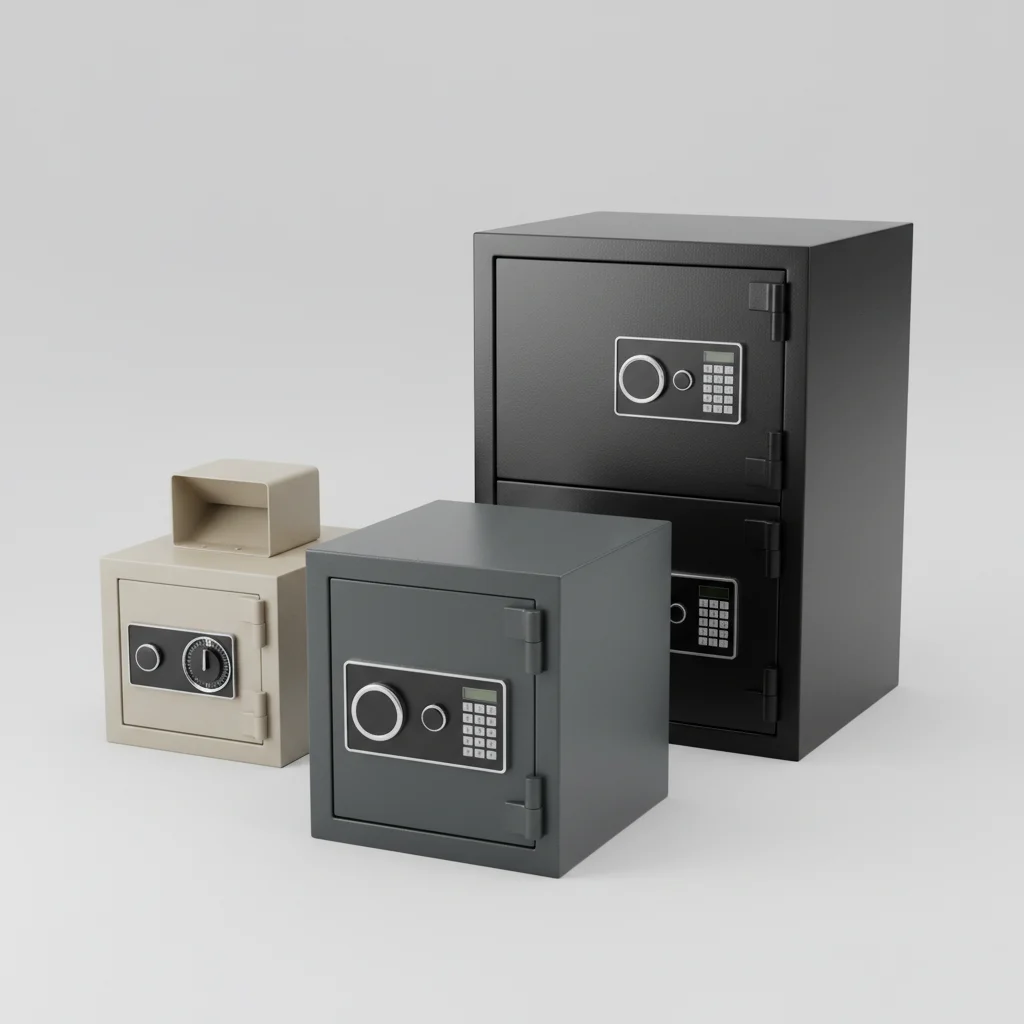
Depository safe boxes are essential for businesses that handle cash regularly, offering a secure way to deposit funds without needing to open the main safe compartment. These safes typically feature a drop slot or a rotary hopper, allowing employees to deposit cash, checks, or other valuables while restricting access to the main contents. This design significantly reduces the risk of internal theft and provides a secure temporary holding solution until funds can be formally processed or transported to a bank. Choosing the right depository safe box involves considering factors such as its capacity, security features, and the type of deposit mechanism that best suits your operational needs.
When selecting a depository safe box, it’s crucial to assess the volume of deposits your business handles daily and the level of security required. For instance, a small retail store might opt for a compact model with a simple drop slot, while a larger establishment with multiple shifts might benefit from a more robust safe with a rotary hopper and advanced locking mechanisms. The construction material, lock type (key, electronic, or biometric), and any fire or water resistance ratings are also vital considerations to ensure your assets are protected against various threats. Investing in a high-quality depository safe box is a proactive step towards safeguarding your business’s financial assets and maintaining operational integrity.
Key Features to Look for in Depository Safe Boxes
When evaluating depository safe boxes, several key features stand out as critical for optimal security and functionality. First, consider the steel gauge of the safe’s body and door; a thicker gauge offers greater resistance against forced entry. Look for safes with solid steel doors and pry-resistant hinges. Second, the type of deposit mechanism is important: a front-loading drop slot is common for envelopes and small packages, while a rotary hopper or a top-loading chute can accommodate larger items and prevent ‘fishing’ attempts. Third, the locking mechanism should be robust. Electronic keypads with programmable codes are popular for ease of use and audit trail capabilities, but traditional key locks or dual-key systems offer reliable security. Some advanced models even include time-delay locks, adding an extra layer of protection against quick access during a robbery.
Additionally, internal features like anti-fish baffles are crucial to prevent unauthorized removal of deposited items through the drop slot. Bolt-down kits are also highly recommended to secure the safe to the floor, preventing thieves from simply carrying it away. Fire and water resistance ratings, while not always standard on all depository safes, can provide added peace of mind, especially if the safe will house important documents in addition to cash. Finally, consider the overall size and weight of the safe, ensuring it fits your designated space and meets your capacity requirements without being easily moved.
Types of Depository Mechanisms
|
Our Picks for the Best Safe Box in 2026
As an Amazon Associate I earn from qualifying purchases.
|
||
| Num | Product | Action |
|---|---|---|
| 1 | SentrySafe Fireproof Safe with Key Lock, Chest Lock Box for Home or Travel Secures Money, Documents, 0.18 Cubic Feet, 6.1 x 14.3 x 11.2 Inches, 1210 |

|
| 2 | Amazon Basics Steel Home Security Safe Box with Electronic Keypad Lock for Documents, Jewelry, Valuables, 1.8 Cubic Feet, Black, 13.8"W x 13"D x 19.7"H |
|
| 3 | SentrySafe Black Fireproof and Waterproof Safe, File Folder and Document Box with Key Lock, Ex. 14.3 x 15.5 x 13.5 inches, HD4100 |
|
| 4 | Yuanshikj Safe Box with Key Lock, Steel Security Lock Box, 0.23 Cubic Feet, 9.1" W x 6.7" D x 6.7" H, Small Hidden Safe for Home Office Cash Jewelry Storage (BLACK) |
|
| 5 | KYODOLED Cash Box with Combination Lock Safe Metal Money Box with Money Tray for Security Lock Box 7.87"x 6.30"x 3.35" Black |
|
| 6 | SentrySafe Fireproof Safe Box with Key Lock, Chest Safe with Carrying Handle to Secure Money, Jewelry, Documents, 0.25 Cubic Feet, 6.3 x 15.3 x 12.1 Inches, 1160 |
|
| 7 | KYODOLED Fireproof Document Box with Key Lock, Small Lock Boxes for Personal Items, Fire and Water Resistance, Fireproof Safe Box for Documents, Jewelry, Passport, Cash, 12.6'' x 8.3'' x 4.3'' Black |
|
| 8 | Amazon Basics Steel Security Safe and Lock Box with Digital Keypad, Easy to Use, Removable Shelf, Secure Cash, Jewelry, Documents, Black, 1.2 Cubic Feet, 16.9-x-14.6-x-10.6-inches (WxDxH) |
|
| 9 | DocSafe 5200°F Document Organizer with Lock, Upgraded Heat Insulated Fireproof&Water-Resistant Box 8 Layers File Organizer, Portable Home Travel Safe Storage for Important Documents and More |
|
| 10 | Amazon Basics Steel Security Safe and Lock Box with Electronic Keypad, Secure Documents Storage, Black, 0.5 Cubic Feet, 13.8" W x 9.8" D x 9.8" H, Removable Shelf |
|
Depository safe boxes primarily utilize two main types of mechanisms for depositing items: drop slots and rotary hoppers. Each has distinct advantages and is suited for different business environments. Drop slot safes feature a narrow opening, typically on the front or top of the safe, through which cash envelopes, checks, or small packages can be inserted. This mechanism is straightforward and cost-effective, making it a popular choice for small businesses or those with moderate cash handling needs. However, it’s important to ensure the slot is designed with anti-fishing baffles to prevent unauthorized removal of contents.
Rotary hopper safes, on the other hand, offer a higher level of security against fishing attempts. These safes have a rotating drum or a drawer that, once loaded with items, is rotated to drop the contents into the main safe compartment. This design ensures that the interior of the safe is never directly exposed during the deposit process, making it much harder for thieves to retrieve items. Rotary hoppers are ideal for businesses with higher cash volumes, multiple employees making deposits, or those operating in higher-risk environments where enhanced security is a priority. Some safes also feature a combination of these mechanisms or specialized chutes for specific items.
Installation and Placement Considerations
Proper installation and strategic placement are paramount for maximizing the security of your depository safe box. The most effective method for securing any safe is to bolt it down to a concrete floor or a sturdy structure. This prevents thieves from simply picking up and carrying away the safe, even if they manage to gain entry to your premises. Many depository safes come with pre-drilled anchor holes and a bolt-down kit for this purpose. If your safe does not include one, it’s advisable to purchase a compatible kit separately. Ensure the bolts used are strong enough to withstand significant force and are installed correctly according to the manufacturer’s instructions.
When choosing a location, consider areas that are discreet but also easily accessible for authorized personnel. Avoid placing the safe in plain sight from windows or entrances. A corner of a back office, a secure storeroom, or even behind a counter in a less visible area can be ideal. Ensure the area is well-lit and, if possible, covered by surveillance cameras. The surface where the safe is placed should be level and capable of supporting its weight, especially for larger, heavier models. Proper ventilation might also be a consideration for safes with electronic components, though this is less common for standard depository models.
Maintenance Tips for Longevity
To ensure your depository safe box remains in optimal working condition and provides reliable security for years to come, regular maintenance is essential. For safes with electronic keypads, periodically check and replace batteries, typically every 6-12 months, or as soon as a low battery indicator appears. Always use high-quality alkaline batteries to prevent leakage and ensure consistent power. For mechanical dial locks, occasional lubrication by a professional locksmith can keep the mechanism smooth and prevent seizing. Key locks should be kept clean, and keys should be stored securely, ideally in a separate location from the safe itself.
Regularly inspect the safe’s door and hinges for any signs of wear, damage, or misalignment. A misaligned door can compromise the safe’s security and make it difficult to open or close. Clean the exterior of the safe with a soft, damp cloth, avoiding harsh chemicals that could damage the finish or electronic components. For depository mechanisms like drop slots or rotary hoppers, ensure they are free from obstructions and operate smoothly. Any unusual noises or resistance during operation should be investigated promptly. If you notice any significant issues or damage, it’s best to contact a qualified safe technician for repair to avoid compromising the safe’s integrity.
- Check and replace batteries in electronic locks every 6-12 months.
- Inspect door, hinges, and locking bolts for wear or damage.
- Keep depository mechanisms clear of obstructions.
- Clean the safe’s exterior with a soft, damp cloth.
- Lubricate mechanical locks professionally as needed.
Get our weekly buyer guide
Practical specs, not advice. Unsubscribe anytime.
