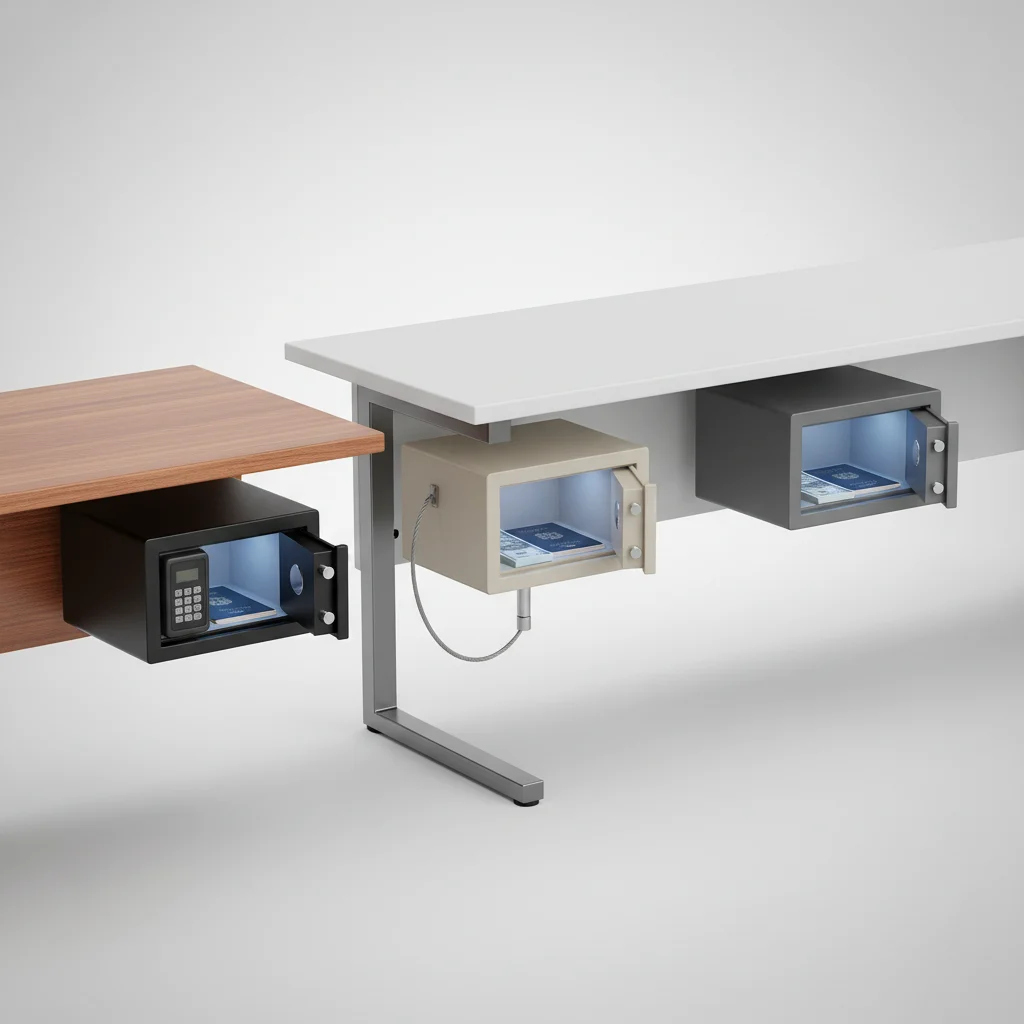
Under-desk safe boxes offer a discreet and secure solution for protecting valuables and sensitive documents in an office environment. These compact safes are designed to be mounted directly beneath a desk, keeping them out of sight and providing quick, convenient access for authorized users. There are typically five key benefits to integrating an under-desk safe into your workspace, ranging from enhanced privacy to theft deterrence.
Why Choose an Under-Desk Safe Box?
The primary advantage of an under-desk safe box is its ability to blend seamlessly into your office setup. Unlike larger, more conspicuous safes, these units are designed for subtle integration, making them ideal for personal offices, shared workspaces, or home offices where space is at a premium. Their hidden nature adds an extra layer of security, as potential intruders may not even realize a safe is present.
Furthermore, under-desk safes provide immediate access to important items like laptops, external hard drives, passports, or confidential files. This accessibility is crucial in a busy work environment where time is often of the essence. Many models feature quick-entry mechanisms such as biometric scanners or digital keypads, allowing for rapid retrieval without fumbling for keys.
Key Features to Look For
When selecting an under-desk safe box, consider several critical features to ensure it meets your specific security needs. The locking mechanism is paramount; options include traditional key locks, digital keypads, and biometric fingerprint scanners. Biometric safes offer the fastest access and eliminate the need to remember combinations or carry keys, making them a popular choice for office use.
Construction material and mounting hardware are also vital. Look for safes made from heavy-gauge steel with pry-resistant doors and robust locking bolts. The mounting system should be secure, typically involving bolts that attach the safe directly to the underside of your desk or a sturdy surface. Ensure the safe comes with all necessary hardware for a secure installation.
- Locking Mechanism: Digital keypad, biometric, or traditional key.
- Material: Heavy-gauge steel for durability and pry resistance.
- Mounting: Secure bolting hardware for under-desk installation.
- Interior Features: Padded lining, internal lighting, and adjustable shelves.
- Size and Capacity: Sufficient space for your intended items without being overly bulky.
Installation and Placement Tips
|
Our Picks for the Best Safe Box in 2026
As an Amazon Associate I earn from qualifying purchases.
|
||
| Num | Product | Action |
|---|---|---|
| 1 | KYODOLED Fireproof Document Box with Key Lock, Small Lock Boxes for Personal Items, Fire and Water Resistance, Fireproof Safe Box for Documents, Jewelry, Passport, Cash, 12.6'' x 8.3'' x 4.3'' Black |

|
| 2 | KYODOLED Cash Box with Combination Lock Safe Metal Money Box with Money Tray for Security Lock Box 7.87"x 6.30"x 3.35" Black |
|
| 3 | SentrySafe Black Fireproof and Waterproof Safe, File Folder and Document Box with Key Lock, Ex. 14.3 x 15.5 x 13.5 inches, HD4100 |
|
| 4 | SentrySafe Fireproof Safe Box with Key Lock, Chest Safe with Carrying Handle to Secure Money, Jewelry, Documents, 0.25 Cubic Feet, 6.3 x 15.3 x 12.1 Inches, 1160 |
|
| 5 | Amazon Basics Steel Security Safe and Lock Box with Electronic Keypad, Secure Documents Storage, Black, 0.5 Cubic Feet, 13.8" W x 9.8" D x 9.8" H, Removable Shelf |
|
| 6 | Amazon Basics Steel Security Safe and Lock Box with Digital Keypad, Easy to Use, Removable Shelf, Secure Cash, Jewelry, Documents, Black, 1.2 Cubic Feet, 16.9-x-14.6-x-10.6-inches (WxDxH) |
|
| 7 | DocSafe 5200°F Document Organizer with Lock, Upgraded Heat Insulated Fireproof&Water-Resistant Box 8 Layers File Organizer, Portable Home Travel Safe Storage for Important Documents and More |
|
| 8 | Amazon Basics Steel Home Security Safe Box with Electronic Keypad Lock for Documents, Jewelry, Valuables, 1.8 Cubic Feet, Black, 13.8"W x 13"D x 19.7"H |
|
| 9 | Yuanshikj Safe Box with Key Lock, Steel Security Lock Box, 0.23 Cubic Feet, 9.1" W x 6.7" D x 6.7" H, Small Hidden Safe for Home Office Cash Jewelry Storage (BLACK) |
|
| 10 | SentrySafe Fireproof Safe with Key Lock, Chest Lock Box for Home or Travel Secures Money, Documents, 0.18 Cubic Feet, 6.1 x 14.3 x 11.2 Inches, 1210 |
|
Proper installation is crucial for maximizing the security of an under-desk safe. Choose a location that is both discreet and easily accessible to you. The underside of a solid wood or metal desk is ideal. Avoid particle board or hollow-core desks, as they may not provide sufficient support for a securely mounted safe. Use all provided mounting hardware and consider adding extra washers or reinforcement plates if the desk material seems less robust.
Ensure there is enough clearance for the safe door to open fully without obstruction. Test the locking mechanism and door operation immediately after installation. Regularly check the mounting bolts to ensure they remain tight, especially if the safe is frequently accessed or if heavy items are stored inside.
Top Under-Desk Safe Box Models
Several manufacturers offer excellent under-desk safe boxes designed for office security. Brands like SentrySafe, Barska, and AmazonBasics provide a range of options with varying features and price points. For those needing to secure a laptop, look for models specifically designed with larger internal dimensions. If quick access to documents is a priority, a biometric model might be the best fit.
Consider the internal capacity carefully. While under-desk safes are generally compact, some offer more vertical space for documents, while others are wider for electronics. Many models also include internal lighting and padded interiors to protect contents from scratches.
Maintaining Your Under-Desk Safe
Regular maintenance ensures the longevity and reliability of your under-desk safe. For digital safes, periodically check and replace batteries to avoid being locked out. Most digital safes will provide a low-battery warning, but it’s good practice to replace them annually. Keep the keypad clean and free of debris. For key locks, ensure the keyhole is clear and lubricate the mechanism if it becomes stiff.
Inspect the safe’s exterior and interior for any signs of wear or damage. If the safe is exposed to humidity, consider placing a desiccant packet inside to prevent moisture buildup, which can damage documents and electronics. Always ensure the door seals properly when closed to maintain its protective qualities.
Get our weekly buyer guide
Practical specs, not advice. Unsubscribe anytime.
